
What if a project sponsor’s confidence in an EB-5 offering doesn’t provide the independent legal guidance you need for your immigration case? If you’re searching for an EB-5 regional center lawyer San Francisco, start by distinguishing who advises you on the petition from who manages or promotes the investment project. Those roles are different, and promotional materials alone may not answer the legal questions that matter to your circumstances.
It’s reasonable to seek clarity before making a substantial, long-term commitment. The September 30, 2026, filing deadline relevant to grandfathering may also affect your timing, so raise it promptly with qualified counsel and ask how it applies to your situation. This guide explains how to assess a lawyer’s EB-5 experience, communication, scope of representation, and approach to potential conflicts, while keeping immigration guidance separate from investment advice.
You’ll also find questions to ask about regional-center designation, project-related immigration issues, and your own eligibility, along with practical ways to prepare for a focused consultation. MJ Law is based in San Jose and serves the broader San Francisco market. The firm has assisted clients with immigration matters for more than three decades, including business and investor visas.
Key Takeaways
- Compare EB-5 regional center lawyers serving San Francisco by attorney access, written scope, communication practices, and how potential conflicts are handled.
- Ask how your eligibility will be assessed and what project materials do, and don’t, establish about your individual immigration case.
- Prepare for a focused consultation by organizing your immigration history, available source-of-funds records, project documents, and questions about important dates.
- Consider whether MJ Law’s San Jose location, investor-visa services, and English- and Spanish-language consultations fit your needs.
EB-5 Regional Center Lawyer Roles in San Francisco
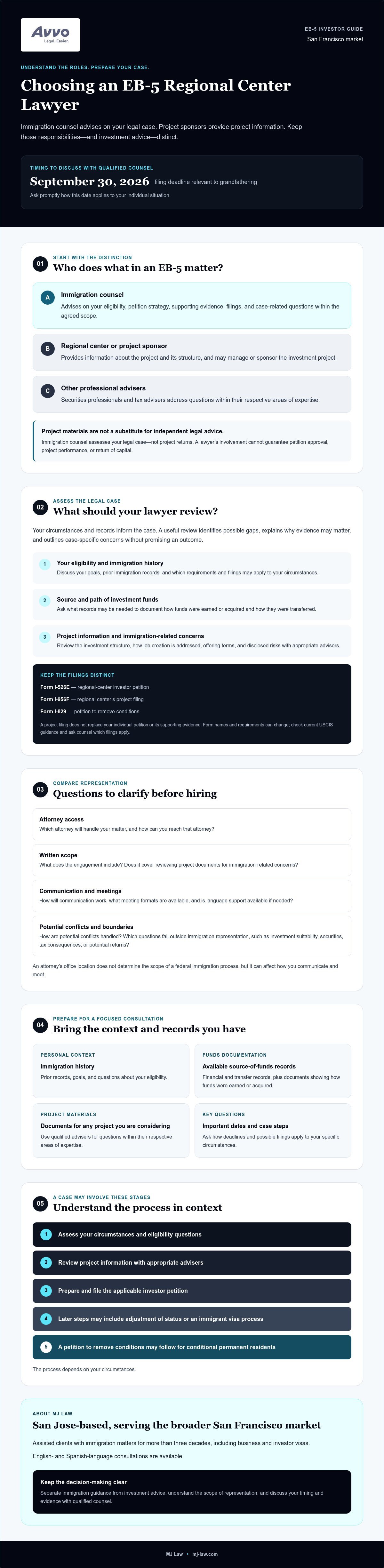
An EB-5 regional center lawyer advises an investor on the immigration case, including eligibility, petition strategy, supporting evidence, filings, and case-related questions. That role is distinct from selecting or managing an investment. The EB-5 Immigrant Investor Visa Program includes a regional-center pathway, but the people involved in a project have different responsibilities. Clarify who represents you and what that representation covers so immigration advice stays separate from project promotion.
Who handles the immigration case, project, and investment?
Your lawyer can assess how your circumstances and records relate to immigration requirements, help prepare petition materials, and explain case steps within the agreed scope of representation. A regional center or project sponsor provides information about the project and its structure. Those materials may help you understand the offering, but they don’t replace independent legal advice about your immigration case.
- Immigration counsel: Advises on your legal case, evidence, filings, and petition-related questions.
- Regional center or project sponsor: Provides project information and manages or sponsors the investment project.
- Other advisers: Securities professionals and tax advisers address questions within their respective areas.
Ask whether your lawyer’s engagement includes reviewing project documents for immigration-related concerns, and which questions fall outside that scope. If you need advice about investment suitability, securities, tax consequences, or potential returns, ask who is qualified to address those issues and whether you should consult a separate adviser.
Why San Francisco-area investors should clarify representation early
EB-5 petitions are federal immigration matters, so an attorney’s office location doesn’t determine the scope of the legal process. Location can affect how you communicate and meet, however. Before hiring an EB-5 regional center lawyer in San Francisco, confirm which attorney will handle your matter, how to reach that attorney, what meeting formats are available, and whether language support is available if you need it.
Immigration counsel assesses your legal case, not project returns. A lawyer’s involvement cannot guarantee petition approval, project performance, or return of capital. Keep these outcomes distinct when reviewing claims and deciding what other professional advice you may need.
How to assess EB-5 eligibility, regional-center filings, and project information
Consider your immigration case and the proposed investment as related but separate parts of the decision. Begin by outlining your goals, immigration history, and eligibility questions. You can then review the project and its documents with appropriate advisers before counsel prepares and files the applicable investor petition. Later steps may include an application to adjust status or an immigrant visa process, followed by a petition to remove conditions if you become a conditional permanent resident. The process depends on your circumstances.
Which EB-5 questions should counsel answer?
Ask how the lawyer will assess your eligibility, the source and path of your investment funds, and the records needed to document them. A useful review identifies possible gaps, explains why particular evidence may matter, and outlines case-specific concerns without promising an outcome. Gather what you have, such as financial and transfer records, documents showing how funds were earned or acquired, prior immigration records, and materials for any project you’re considering.
Form names and requirements can change. Check current guidance with USCIS EB-5 program requirements and ask counsel which filings apply to your case. For example, Form I-526E relates to a regional-center investor petition, Form I-956F to a regional center’s project filing, and Form I-829 to a petition to remove conditions. A project filing does not replace your individual petition or its supporting evidence.
How should investors review regional-center and project information?
Read project materials for information about the investment structure, how job creation is addressed, the offering terms, and disclosed risks. Ask qualified advisers to explain matters within their areas of expertise. Regional-center designation or a project filing does not guarantee petition approval, project completion, or repayment of your capital.
Immigration eligibility and investment risk are related, but they are separate assessments. Immigration counsel can help you understand how available records relate to your petition. Investment, tax, and securities questions may require advice from other professionals. An EB-5 regional center lawyer serving San Francisco investors should explain what the legal engagement covers and identify questions outside its scope.
Before choosing next steps, organize your records and list what remains unclear. A focused conversation can help distinguish legal questions from those that call for another adviser. You can discuss your EB-5 case questions with MJ Law.
How to compare EB-5 regional-center lawyers serving San Francisco
Compare the lawyer’s process, not just the confidence of a presentation. A useful conversation should clarify who will handle your matter, what the representation includes, and how the lawyer approaches uncertainty. Because EB-5 rules can be complex and change, AILA offers context on navigating complex EB-5 laws. Ask a prospective lawyer to explain how current guidance relates to your circumstances.
Use these criteria to compare your options:
Relevant EB-5 experience: Ask whether the lawyer has handled cases with facts like yours, such as a similar immigration history or source-of-funds documentation. Look for specifics about the experience rather than a broad success claim.
Attorney access: Confirm who will lead the case, prepare filings, and respond to substantive questions. Ask how to contact the responsible attorney.
Written scope: Request a clear description of the work included, services excluded, and how additional legal work is handled.
Communication: Discuss how you’ll receive updates, how questions are routed, and what to do if your circumstances or government guidance changes.
Language support: If you prefer to communicate in a language other than English, ask what support is available throughout the representation.
Questions to ask before signing an engagement agreement
Ask who is responsible for each part of the matter and how the firm identifies case-specific risks or missing evidence. Clarify whether the lawyer’s role includes reviewing project materials for immigration-related concerns, and which investment, tax, or securities questions require separate advisers. Ask how potential conflicts are identified and managed, particularly if someone involved in the project has a commercial relationship with the firm or its representatives.
Read the engagement agreement carefully. Before you commit, make sure you understand the boundaries of the representation. If an explanation is unclear, ask for clarification in writing.
How to compare counsel without relying on promises
Look for clear, specific answers that acknowledge uncertainty. Testimonials and generalized approval claims don’t show whether a lawyer’s experience matches your facts, and past results can’t establish what will happen in your case. A careful lawyer should describe relevant experience without implying that your outcome will be the same.
If you’re considering an EB-5 regional center lawyer in San Francisco, verify the attorney’s California license status and review any public disciplinary information through the State Bar of California’s official attorney search. If you’re exploring another investor pathway, ask counsel whether it may suit your circumstances. This E-2 investor visa guide can help you identify questions to discuss.
What San Francisco-area EB-5 investors should prepare before a lawyer consultation
A focused consultation starts with a clear picture of your goals and circumstances. Before meeting an EB-5 regional center lawyer in San Francisco, write a brief summary, gather available records, note important dates, and prepare questions. You don’t need a complete file in advance. The first discussion can help you understand whether the representation may fit and what information or steps may come next. It isn’t a promise of a final eligibility determination.
A practical consultation checklist for Bay Area investors
Write down your current immigration status, prior applications or petitions, family considerations, and investment plans. Bring relevant records if available, such as identity documents, immigration notices, source-of-funds records, and materials from a regional center or project. List any deadlines you’re aware of and ask counsel to verify how they apply to your situation.
- Ask who will handle your case and how you can contact the responsible attorney.
- Clarify what legal work is included, whether project-document review is within scope, and which questions may require other advisers.
- Discuss communication preferences, language support, and how potential conflicts are identified and addressed.
- Ask how representation from a San Jose-based firm would work for you in San Francisco or elsewhere in the Bay Area, including meeting formats and access to the attorney.
MJ Law is located in San Jose, and consultations are available in English and Spanish. Confirm the meeting format and language arrangements directly so you know what to expect. To protect your privacy, don’t email or upload sensitive identity or financial records through an unsecured channel. Ask the firm how it wants documents shared before sending them.
When another immigration pathway may deserve review
Your goals may raise questions about other employment-based or investor-based options. Ask counsel whether comparing pathways makes sense for your circumstances. These options aren’t interchangeable: they can have different eligibility requirements and serve different objectives. If your background makes an extraordinary-ability category relevant, review this EB-1A extraordinary ability guide and discuss whether it warrants further consideration.
Bring your summary and questions to a conversation about your immigration circumstances and possible next steps. You can schedule an immigration consultation with MJ Law.
Working with MJ Law on an EB-5 matter: scope, communication, and next steps
MJ Law is an immigration firm in San Jose, California, serving clients in the broader San Francisco market. The firm handles business and investor visas, including EB-5, and its history dates back to 1985. Consultations are available in English and Spanish. If you’re looking for an EB-5 regional center lawyer in San Francisco, first clarify whether the firm’s immigration representation fits the questions and circumstances you want to address.
A consultation can help you explain your goals and immigration history, identify questions that need closer review, and understand the proposed scope of legal work. It’s also an opportunity to ask who would handle your matter, how communication would work, and what information may be needed to assess your case. Confirm current EB-5 service availability and attorney assignments directly with the firm.
What a first discussion can help clarify
Bring a concise overview of your circumstances, along with available immigration records and any project materials you want to discuss. Ask which issues fall within immigration representation and which may require a separate professional. Case-specific advice depends on your facts and the agreed scope of engagement. A preliminary conversation can identify questions and possible next steps, but it isn’t a promise of eligibility or approval.
- Clarify what legal work is included and how the firm will communicate with you.
- Ask how your immigration history, goals, and available evidence may affect the issues counsel needs to assess.
- Identify investment, tax, or securities matters that may require advice from separate qualified advisers.
Immigration counsel can advise on the legal process and your petition strategy. That doesn’t make the lawyer a project sponsor or a source of assurances about investment returns. Keep those roles distinct as you decide what advice you need.
Schedule an EB-5 immigration consultation
If you’re ready to discuss your circumstances and clarify whether the representation may be a fit, you can schedule an immigration consultation. A focused conversation can help you identify questions to resolve before choosing your next steps.
EB-5 program details and procedures can change. Verify current information with official sources, and discuss how the rules apply to your circumstances with qualified immigration counsel.
Make Your Next EB-5 Decision With Clear Guidance
Choosing an EB-5 regional center lawyer in San Francisco starts with separating immigration advice from project promotion. Confirm who will handle your petition, what the engagement includes, and where you may need separate investment, tax, or securities advice. Before a consultation, organize your immigration history, available records, goals, and questions so the discussion can focus on your circumstances and possible next steps.
MJ Law is based in San Jose and handles business and investor visas, including EB-5. The firm’s history dates back to 1985, and consultations are available in English and Spanish. A conversation can clarify the scope of representation and identify questions for further review without promising eligibility or a particular outcome.
If you’re ready to discuss your circumstances, schedule an immigration consultation with MJ Law. Verify current program details with official sources and seek qualified advice for your individual situation. A careful next step can make a complex decision more manageable.
Frequently Asked Questions
Is a regional-center lawyer different from an EB-5 project representative?
Yes. Immigration counsel advises the investor on the legal case, eligibility questions, and petition filings. A regional center or project representative provides information about the investment project and its structure. These roles aren’t interchangeable, and a lawyer’s responsibilities depend on the written engagement. Before proceeding, ask who will provide legal advice, what the lawyer’s work includes, and whether project-related questions fall within that representation or require another adviser.
Can an EB-5 regional center guarantee a green card or investment repayment?
No. Neither immigration approval nor repayment of invested capital should be treated as guaranteed. Petition outcomes depend on the applicable requirements and the investor’s case, while project performance and repayment involve separate investment risks. Review promotional statements and project documents carefully, and ask qualified immigration, financial, tax, or securities advisers to address questions within their respective fields. A lawyer or regional center should not promise a specific immigration or financial result.
What should I ask an EB-5 lawyer before hiring them in San Francisco?
Ask about experience with cases resembling yours, who will lead the matter, how to reach that attorney, and what work the written engagement includes or excludes. Discuss communication practices, language support, and how potential conflicts are handled, especially if project-related commercial interests are involved. When comparing EB-5 regional center lawyers serving San Francisco investors, look for clear, candid explanations of uncertainty rather than predictions of a particular outcome.
How do I verify that an EB-5 lawyer is licensed in California?
Use the State Bar of California’s official attorney information search to confirm the lawyer’s identity, license status, and any public disciplinary information. Check that the record matches the attorney you plan to hire rather than relying only on a firm biography or promotional material. Then ask about EB-5 experience relevant to your circumstances. A valid California license is important, but it doesn’t by itself establish specialized EB-5 experience.
Does an EB-5 regional-center lawyer review the investment project?
That depends on the lawyer’s role and the scope of the engagement. Counsel may review project materials for immigration-related questions, but that doesn’t necessarily include financial analysis or securities due diligence. Ask which documents the lawyer will examine, what issues the review addresses, and what falls outside the work. For investment suitability, tax consequences, or securities questions, ask whether separate qualified advisers should review the offering.
Can I speak with an EB-5 lawyer in San Francisco if the firm is in San Jose?
Ask a San Jose-based firm whether it serves clients in San Francisco and the surrounding Bay Area, and what in-person or remote meeting formats are available. Confirm who will handle your matter, how communication works, and whether consultations are available in your preferred language. MJ Law is located in San Jose, not San Francisco, and offers consultations in English and Spanish. Confirm current meeting arrangements directly with the firm.
What documents should I bring to an EB-5 consultation?
Bring available identity records, immigration history such as prior filings or notices, source-of-funds and transfer documentation, and project information if you have it. A concise written summary of your goals and key dates can also help focus the discussion. You don’t need a complete file before asking questions. Before sending sensitive financial or identity records, confirm the firm’s secure document-sharing method and avoid unsecured email or upload channels.