
Citizenship eligibility depends on the path: applicants for naturalization generally must be at least 18 and have held permanent resident status for three to five years, depending on their circumstances, according to U.S. Citizenship and Immigration Services (USCIS). Naturalization begins with Form N-400, and a certificate of citizenship attorney in San Jose can help you understand which process fits your situation.
Choosing the right immigration lawyer matters when your eligibility, records, or application history raises questions. This guide explains the basic naturalization requirements, how citizenship applications and interviews work, and what options may be available if an application is denied. You’ll also learn how legal support can help you prepare and decide on a next step.
Key Takeaways
- Naturalization applicants must be at least 18 years old, according to U.S. Citizenship and Immigration Services; review the other eligibility requirements before preparing an application.
- Distinguish naturalization from a Certificate of Citizenship so you can focus on the process that matches how you may have acquired citizenship.
- Gather your immigration and identity records before discussing eligibility, application preparation, or interview support with an attorney.
- If a citizenship application is denied, understand the decision and the available appeal or review options before choosing your next step.
- For a consultation, prepare a clear summary of your immigration history and the questions you need answered.
Are you searching for a top immigration lawyer in San Jose, California?
Choose an immigration attorney whose experience fits the question your case raises. A certificate of citizenship attorney in San Jose can assess whether your records support an application, identify missing documents, and help plan a clear filing strategy. Effective representation starts with the facts of your case, not broad promises.
In San Jose, immigration and citizenship matters can involve different goals, from establishing citizenship to resolving a family member’s immigration issue. Before a consultation, write down the decision you need help with and gather relevant immigration records. For example, a name difference between a birth record and a later identity document may affect how you organize and explain the records.
For an individual, representation may involve reviewing personal history and preparing application materials. An organization’s immigration matter may instead involve an employee’s role, supporting records, and the purpose of a filing. In either case, accurate information helps an attorney identify the legal issue and plan next steps. Bring prior applications and government notices related to the matter.
San Jose and Bay Area residents may prefer legal help close to home, although immigration paperwork can involve federal agencies and records from elsewhere. If you moved to California, for example, you may need documents issued in another state or country. Organize records by type and date, and note missing documents or inconsistent details. This gives an attorney a practical starting point for reviewing your file.
Immigration matters can also involve applicants who live outside the Bay Area. Documents and communication may need to be coordinated across locations, while the application depends on the person’s circumstances and the applicable process. Ask how the attorney will review your records, explain filing steps, and keep you informed about requests or notices. Clear responsibilities support timely communication.
USCIS sets separate filing fees for Form N-600 and Form N-600K, so the applicable amount depends on which form applies and the fee rules in effect. USCIS processing time also varies with the form, application completeness, and agency workload; missing or inconsistent records can require additional review.
Consider hiring an immigration attorney before filing if your citizenship evidence is incomplete, your records conflict, or you’ve received a USCIS notice. Early legal review can help identify the issue, organize supporting documents, and clarify response or filing steps before a deadline becomes urgent.
Attorney experience is relevant when it aligns with the legal question in your case. For example, ask how an attorney approaches a citizenship application involving records from different countries or a prior immigration filing. Raul Ray has been a licensed California attorney for over 36 years, according to available market information. Compare that experience with the specific work your matter requires, including document review, application preparation, or representation in an appeal.
Consultations and firm contact information
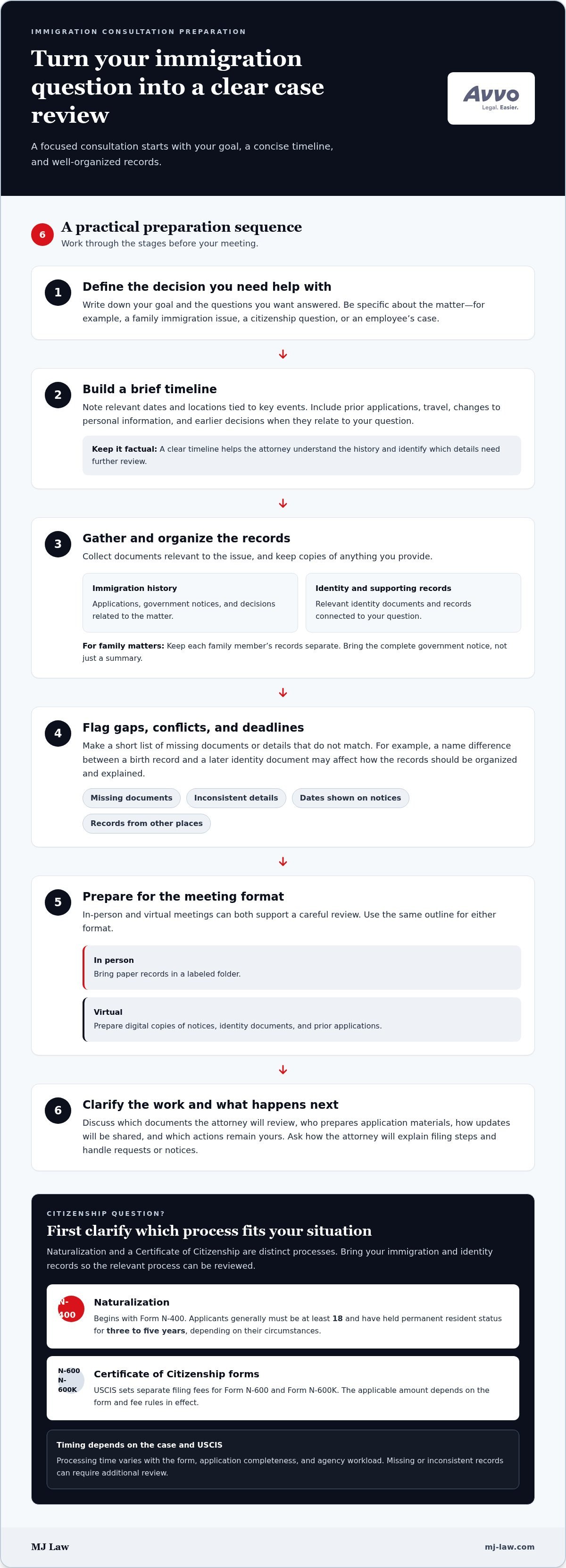
A focused consultation turns a broad immigration concern into a practical agenda. Before meeting with an attorney, write down your goal, relevant dates, and questions about the process. Someone supporting a fiancé abroad, for example, may need to explain the relationship timeline and prior filings. A company discussing an employee’s case should identify the role and the decision it needs to make.
In-person and virtual consultations can both support a careful review. For an in-person meeting, bring paper records in a labeled folder. For a virtual meeting, prepare digital copies of notices, identity documents, and prior applications. Use the same outline either way: explain your goal, summarize the history, identify deadlines shown on notices, and ask what happens next.
A confidential consultation gives you a setting to discuss sensitive immigration history directly with an attorney. Be ready to describe prior applications, travel, changes to personal information, or earlier decisions. If a family member’s records are part of the matter, keep their documents separate from yours. Clear organization helps the lawyer understand which facts relate to each person and which questions need further review.
Consular processing may apply when an eligible family member is outside the United States and the case involves an immigrant visa interview at a U.S. consulate. The consultation can clarify who is applying, where they live, which family relationship supports the case, and what records are available. A fiancé’s situation may follow a different process from a spouse’s or another relative’s, so describe the relationship accurately.
Use the appointment to understand the scope of representation. Ask which documents the attorney will review, who prepares application materials, how you’ll receive updates, and which actions remain yours. If USCIS or a consular office sent a notice, bring the complete notice rather than a summary. Its wording and response instructions can shape the next step.
For a productive meeting, arrange your materials before scheduling:
- Collect immigration notices, applications, and decisions relevant to the issue.
- Write a brief timeline with dates and locations tied to key events.
- List questions about eligibility, supporting evidence, and the expected work.
- Keep copies of documents you provide and note any items still being gathered.
To discuss a family immigration matter, you can schedule an immigration consultation. Bring your timeline and records so the conversation can focus on the facts, legal questions, and practical next steps.
MJ Law, based in San Jose, helps clients understand citizenship requirements, prepare applications, and get ready for the interview process.
Naturalization and citizenship services
Naturalization is the process through which an eligible noncitizen becomes a U.S. citizen. According to U.S. Citizenship and Immigration Services (USCIS), an applicant must be at least 18 years old to naturalize. Applicants generally must also have held permanent resident status for three to five years, depending on their circumstances, according to USCIS.
According to USCIS, naturalization begins with filing Form N-400. The application requires accurate personal and immigration history, so review answers against prior records before submitting. Changes in residence, travel, marriage, or earlier immigration filings may need careful attention. USCIS may also require applicants to complete an interview and demonstrate English knowledge and civics understanding.
A Certificate of Citizenship documents citizenship acquired through a U.S. citizen parent or parents. A Certificate of Naturalization documents citizenship obtained through naturalization. The distinction matters because the applicant’s path to citizenship determines which evidence and application process apply.
For a Certificate of Citizenship, the application form is Form N-600. Supporting documents should establish the applicant’s identity and citizenship claim, such as birth and parentage records and evidence of a parent’s U.S. citizenship. The exact evidence depends on the applicant’s circumstances and the basis of the claim. Organize records by person and date, and include relevant translations where needed.
Before preparing an application, identify the citizenship pathway and check whether your records support each part of the claim. A birth certificate, for example, may establish parentage, while a parent’s citizenship records address a separate requirement. If names differ across documents, gather records that explain the difference rather than leaving the mismatch unexplained. Keep copies of the complete filing and USCIS correspondence.
An immigration lawyer can review your case, assess the application route, and help organize evidence. This can be especially useful when family records come from different countries, a parent’s citizenship history is complex, or an earlier filing contains inconsistent information. An immigration attorney can also help applicants prepare for a naturalization interview and understand USCIS requests.
Use this preparation list to make the review more focused:
- Identify whether the claim is based on a parent’s citizenship or naturalization eligibility.
- Collect identity, birth, parentage, and relevant citizenship records.
- Compare names, dates, and locations across documents.
- Separate records for each family member involved in the claim.
- Keep USCIS notices and copies of earlier applications together.
For applicants pursuing naturalization, marriage to a U.S. citizen may affect the applicable eligibility period, but marriage alone does not grant citizenship. Confirm that the application path matches your status and history before filing. Careful preparation helps make the basis of your citizenship claim clear to USCIS.
Citizenship and citizenship appeals
USCIS may deny or delay a Certificate of Citizenship application if evidence is incomplete, records conflict, or the filing does not establish the claimed basis for citizenship. Different names on a birth record and a parent’s citizenship document, for example, may need explanation. A request for more evidence can also extend review while USCIS considers the response.
Read every USCIS notice carefully before deciding what to do. A request for evidence calls for a response to the issues identified; a denial requires reviewing the reasons and available review options. Keep the complete notice, envelope, submitted application, and supporting records together.
If USCIS denies your application, start by identifying the specific finding. Did the decision question parentage, a parent’s citizenship, or whether the submitted records establish the claim? Compare each point with the evidence already filed, then identify documents or explanations that address the gap. Avoid sending unrelated papers without connecting them to the stated issue.
Appeal or review options depend on the type of decision and the instructions in the USCIS notice, which explains the available process and filing requirements. Because deadlines may apply, note the date on the notice and seek legal guidance promptly. An immigration attorney can assess the decision, organize the relevant record, and explain which response fits your case.
A delay calls for a different first step. Check whether USCIS sent a notice requesting evidence or scheduling an action. If so, follow the instructions and keep proof of your response. If there is no request, review the application receipt and correspondence for case-specific updates. Don’t assume a delay means denial; the next step depends on what USCIS has communicated.
For people in San Jose or elsewhere in California, earlier immigration matters may affect how a citizenship claim is documented. A green card record, prior application, or inconsistent identity detail may need to be reviewed alongside the Certificate of Citizenship filing. Organize those materials by date and explain how each relates to the claim.
Before discussing an appeal or delayed case with an attorney, assemble:
- The USCIS decision, request, or other notice and its envelope.
- A copy of the N-600 application and evidence submitted.
- Records addressing the specific concern raised by USCIS.
- Earlier immigration documents that explain status, names, or family relationships.
A strong response directly addresses USCIS’s stated concern and makes the supporting evidence easy to follow. San Jose immigration counsel can help distinguish a missing document from a disputed eligibility issue, then plan a focused response based on the notice and case record.
What does a Certificate of Citizenship prove, and who is eligible to apply?
A Certificate of Citizenship is an official document used to establish that its holder is a U.S. citizen. It records citizenship acquired through a parent, rather than citizenship obtained later through naturalization. The document can help demonstrate citizenship when an agency, employer, or other institution requests proof.
Form N-600 is the application used to request a Certificate of Citizenship from U.S. Citizenship and Immigration Services. Filing the form doesn’t itself create citizenship through naturalization. Instead, the applicant asks USCIS to recognize and document citizenship they claim to have acquired through a parent. Whether that path fits depends on the applicant’s family and immigration history.
Eligibility depends on the facts supporting the citizenship claim. Relevant details can include the applicant’s birth, the parent-child relationship, a parent’s U.S. citizenship, and the applicant’s circumstances when citizenship was acquired. A birth certificate may establish parentage, while a parent’s citizenship records may address a separate part of the claim. The documents should tell a consistent story.
Before preparing Form N-600, create a record set that connects each document to a fact in the claim. Compare spellings, dates, and places across birth records, identity documents, and citizenship evidence. If a parent’s name changed, include records that explain the change. If a document contains an error, note the discrepancy and gather relevant records showing the correct information.
A Certificate of Citizenship differs from a Certificate of Naturalization in its purpose. The first documents citizenship acquired through a parent; the second documents citizenship obtained through naturalization. That distinction helps applicants choose the correct process and avoid treating an N-600 request like a naturalization application.
Organize the materials before submitting the application:
- Gather the applicant’s identity and birth records.
- Collect documents showing the parent-child relationship.
- Include records relevant to the parent’s U.S. citizenship.
- Compare names and dates, then identify inconsistencies that need explanation.
- Keep a complete copy of Form N-600 and its supporting evidence.
For example, a difference between a parent’s name on a birth certificate and a later identity record may need supporting documentation. An immigration attorney can review how the records relate to the claim, identify gaps, and help organize an application. This is particularly useful when family records come from different places or contain conflicting details.
If you’re assessing whether your records support a citizenship claim, schedule a citizenship eligibility consultation to discuss the relevant documents and application steps.
MJ Law: Family Immigration Services
MJ Law provides Family Immigration Services for people addressing family-based immigration questions. If your citizenship claim involves a parent or another family relationship, legal guidance can help clarify the issue and organize relevant records. For a naturalization matter, MJ Law also handles U.S. Citizenship and Naturalization, including help understanding eligibility and preparing an application.
Bring your citizenship documents, prior immigration records, and any USCIS notices to start a focused discussion. If your needs involve a relative’s immigration process rather than your own citizenship application, explain the family relationship and the outcome you’re seeking. MJ Law also handles marriage-based green cards and other family immigration matters.
Contact MJ Law to discuss your citizenship or family immigration matter and possible next steps.
Take the Next Step With a Clear Plan
Turn your citizenship question into a focused plan: identify the outcome you need, gather the records connected to it, and note unresolved details. A certificate of citizenship attorney in San Jose can help assess how those facts fit your application or response strategy. Organized documents and clear questions make the first conversation more useful.
MJ Law offers Family Immigration Services, Business and Investor Visas, and Employment-Based Visas for people whose immigration needs extend beyond citizenship. A consultation can focus on the issue affecting you and the practical steps ahead, without assuming every case follows the same route.
Contact MJ Law to discuss your case and the questions you want addressed. A considered first step can help you move forward with greater clarity and confidence.
Frequently Asked Questions
How Can Your Lawyers Help Me Attain Citizenship?
An immigration lawyer can help identify the right citizenship pathway and prepare your case around its requirements. For example, an attorney can review whether your claim concerns citizenship through a parent or naturalization, then flag records that need clarification. They can also help organize supporting documents, prepare application materials, and plan responses to USCIS correspondence. Share your full immigration history, including prior filings, so the guidance addresses details that may affect your case.
How do I go from Green Card to citizenship?
To pursue citizenship through naturalization, determine whether you meet the eligibility requirements, then file Form N-400 with USCIS. The required permanent-resident period is generally three to five years, depending on your circumstances. Before filing, review your immigration history and supporting records for details that need explanation. Prepare for the required interview and test as part of the process. A marriage-based immigration history may affect which eligibility period applies.
What Are the Requirements for Citizenship in the United States?
For naturalization, the basic requirements include being at least 18 years old, holding permanent-resident status for the required period, English fluency, and passing a citizenship test. U.S. Citizenship and Immigration Services says the required permanent-resident period is generally three to five years, depending on circumstances. Applicants should also review their records and history before filing, since the correct eligibility path depends on the facts of each case.
How can I find a qualified citizenship or immigration attorney in San Jose, California?
Look for an attorney whose practice covers the citizenship matter you need help with, then discuss your situation and the proposed scope of representation. Ask how the attorney will assess your records, explain next steps, and communicate about USCIS notices. In San Jose, MJ Law handles U.S. Citizenship and Naturalization. Bring a concise case timeline and relevant documents to make the initial discussion more specific.