For many couples in the Bay Area, the hardest part of falling in love isn’t the distance; it’s the 10 to 18 month wait for a government approval that feels entirely out of your hands. You’ve likely spent hours scrolling through conflicting online forums or worrying about the high-stakes interview at the San Francisco USCIS field office. It’s completely normal to feel anxious when your entire future together depends on a mountain of paperwork and shifting 2026 regulations.
This guide provides the clarity you need to move forward with confidence. By working with a K-1 visa lawyer San Francisco couples trust, you can replace uncertainty with a predictable timeline and a strategy designed to avoid the dreaded Request for Evidence. We’ll break down the $675 filing fees, the specific income requirements for 2026, and the exact steps required to ensure your wedding happens on schedule. From the initial I-129F petition to the final adjustment of status, you’ll discover how to secure your partner’s future in the United States without the stress of going it alone.
Key Takeaways
- Learn how the 90-day marriage rule impacts your timeline and why proactive planning is vital for a smooth transition to life in the Bay Area.
- Partnering with a K-1 visa lawyer San Francisco ensures your petition meets the strict 2026 “bona fide” relationship standards and physical meeting requirements.
- Compare the speed and costs of the K-1 fiancé visa against the CR-1 marriage visa to choose the most efficient path for your family’s future.
- Discover how a comprehensive legal audit of your relationship evidence can prevent costly Requests for Evidence (RFEs) and keep your processing timeline predictable.
- Gain insights into the specific interview nuances at the San Francisco USCIS field office to prepare you and your partner for a successful outcome.
Understanding the K-1 Fiancé Visa: Why San Francisco Couples Need a Strategy
The K-1 visa serves as a specific legal pathway for the foreign-citizen fiancé of a U.S. citizen to enter the country for the purpose of marriage. Unlike standard travel documents, this is a non-immigrant entry with a clear, intended pathway to permanent residency. For a detailed K-1 visa overview, you can see how it bridges the gap between being apart and starting a life together. Once your partner lands at San Francisco International Airport (SFO), a 90-day countdown begins. You must marry within this window. If you don’t, the foreign partner must depart the United States immediately. The clock is absolute.
In 2026, USCIS has increased its focus on financial stability, especially in high-cost areas. San Francisco couples often face heightened scrutiny regarding income levels. Because the cost of living here is significantly higher than the national average, officers may look more closely at whether the U.S. sponsor can truly support the household without relying on public assistance. A seasoned K-1 visa lawyer San Francisco can help you document your financial health to meet these rigorous standards. Professional guidance prevents the common filing errors that lead to months of unnecessary delays.
The Purpose of the K-1 Visa in 2026
This visa’s primary benefit is allowing you to celebrate your wedding on U.S. soil surrounded by your local community. It acts as a legal bridge, leading directly to the Adjustment of Status process once you’re married. Transparency is key here. You must be careful about the “preconceived intent” trap. Entering the U.S. on a standard tourist visa with the secret plan to marry and stay can lead to permanent fraud charges. The K-1 is the honest, legal way to bring your partner home while protecting their future immigration status.
Common Challenges for Silicon Valley Couples
Professionals in the Bay Area manage demanding tech careers while navigating unpredictable USCIS backlogs. Balancing a high-pressure job at a startup or a major firm while responding to complex government inquiries is exhausting. Silicon Valley’s workforce is also uniquely international. This often means dealing with complex documentation from multiple countries, which requires a meticulous approach to evidence. We act as a steady hand, ensuring that your international background and professional success are presented as assets rather than complications during the petition process.
K-1 Visa Requirements and Eligibility: Beyond the ‘Bona Fide’ Relationship
Securing a fiancé visa requires meeting specific statutory criteria before you even begin gathering photos or chat logs. First, the petitioner must be a U.S. citizen. Lawful Permanent Residents are not eligible to sponsor a fiancé; they must be married and file a spousal petition instead. Additionally, you must prove you’ve physically met your partner in person within the two years immediately preceding your filing. While USCIS allows for rare waivers based on extreme hardship or cultural practices, these are exceptionally difficult to obtain without the help of a K-1 visa lawyer San Francisco.
You must also demonstrate the legal capacity to marry. If either partner was previously married, you’ll need to provide final divorce decrees or death certificates to prove those marriages have legally ended. On the financial side, the U.S. sponsor must meet the 100% Federal Poverty Guidelines. In 2026, the requirements include:
- A minimum annual income of $21,640 for a two-person household in the contiguous states.
- Proof of U.S. citizenship via a passport, birth certificate, or naturalization certificate.
- Evidence of a physical meeting within the last 24 months.
If your income falls short, you might need a joint sponsor, though this adds another layer of complexity to the USCIS Fiancé(e) Visa requirements. Ensuring these foundational elements are in place is the first step toward a successful entry.
Proving a Bona Fide Relationship
A bona fide relationship is one entered in good faith and not for immigration benefits. To prove this, you’ll need a robust portfolio of digital and physical evidence. This includes time-stamped photos of your time together, flight itineraries, and detailed chat logs that show a consistent, developing connection. A K-1 visa lawyer San Francisco can help you organize these materials into a compelling narrative for the government. Affidavits from friends or family members in the San Francisco community can also serve as powerful secondary evidence, as they testify to the genuine nature of your bond.
The I-129F Petition Process
The journey begins by filing Form I-129F with USCIS, which currently carries a $675 filing fee in 2026. While this is a different form than the spousal petition, reviewing an I-130 petition evidence checklist is highly beneficial because the standards for proving a real relationship remain nearly identical. The goal is to submit a packet that is complete and organized. If your filing is missing key documents, USCIS will issue a Request for Evidence (RFE). An RFE can stall your case for several months, adding stress to an already long separation. If you’re feeling overwhelmed by the paperwork, you can schedule a time to speak with us to ensure your petition is handled with precision.
K-1 Fiancé Visa vs. CR-1 Marriage Visa: Choosing the Right Path in 2026
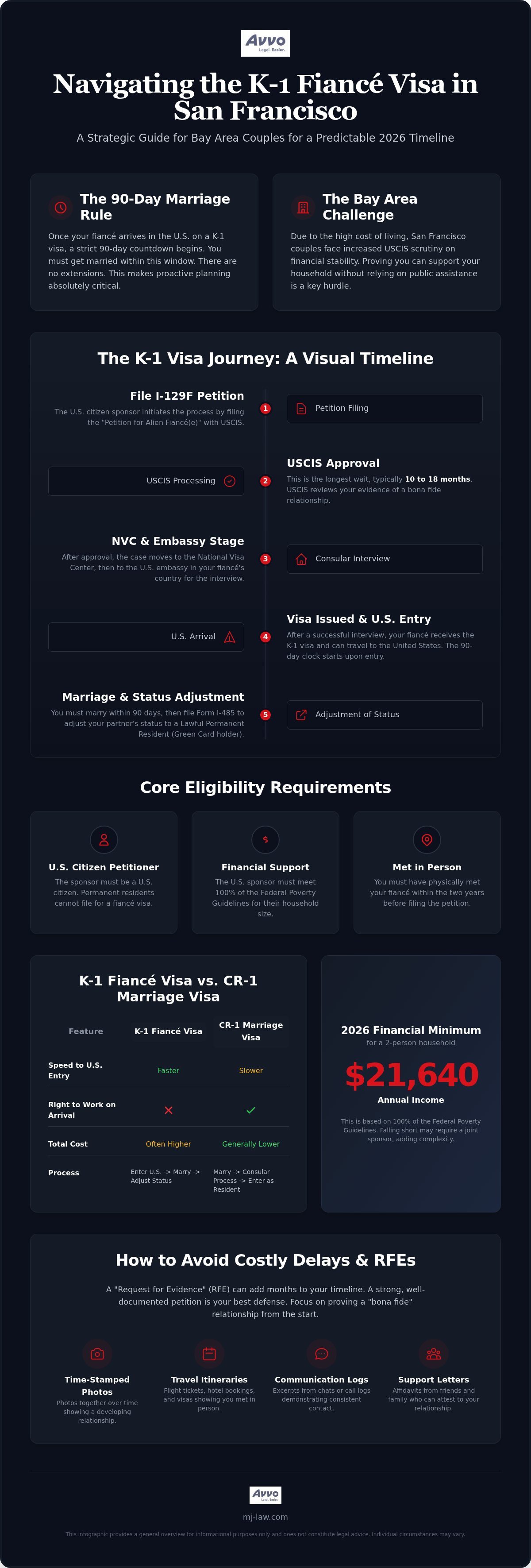
Choosing between the K-1 fiancé visa and the CR-1 marriage visa in 2026 requires a careful balance of speed against long-term stability. While the K-1 has traditionally been the fastest way to bring a partner to the U.S., the timeline gap is narrowing. Current data indicates that the K-1 process takes approximately 10 to 18 months for entry. In comparison, the CR-1 marriage visa takes between 12 to 18 months. However, the K-1 is a two-step journey. Once your partner arrives and you marry, you must still file for an Adjustment of Status, which carries a $1,440 filing fee in 2026. A K-1 visa lawyer San Francisco can help you determine if the slightly faster entry justifies the additional paperwork and costs later on.
The total government cost for the K-1 route, including the subsequent green card application, sits around $2,380. The CR-1 path is often more economical, with total costs ranging from $1,700 to $2,800. The most significant drawback of the K-1 is the “work gap.” Your partner won’t have the legal right to work or travel abroad immediately after the wedding. They must wait for their Employment Authorization Document (EAD), which can take several months. For couples in the high-cost San Francisco market, losing one income for half a year is a major financial consideration. Understanding the full implications of each route — including how adjustment of status vs consular processing affects your right to work and travel — is essential before committing to a path. Same-sex couples navigating this decision should also review our guide on securing a same-sex marriage green card San Jose residents can rely on, which covers the unique considerations and local processing timelines at the Coleman Avenue field office.
The K-1 Advantage: Faster Entry
If your priority is ending a long-distance separation as quickly as possible, the K-1 remains the strongest option. It’s ideal for couples who don’t want to wait nearly two years to live together. Beyond the timeline, there’s a significant emotional benefit to planning your wedding on U.S. soil. You gain the flexibility to choose a local venue in the Bay Area and celebrate with your immediate community. This path allows you to start your shared life in the U.S. while the final residency details are still being processed.
The CR-1 Advantage: Immediate Green Card
The CR-1 visa’s primary strength is that your spouse enters the United States as a Lawful Permanent Resident. They receive their green card and Social Security number shortly after arrival, allowing them to work and travel immediately. This path bypasses the entire Adjustment of Status process and its associated fees. Because the CR-1 requires you to be married before filing, USCIS scrutinizes the marriage evidence very strictly. Partnering with a marriage green card RFE lawyer in San Jose is vital if you choose this path, as it ensures your initial filing is robust enough to avoid delays.
The K-1 Visa Timeline: Navigating USCIS and the San Francisco Legal Landscape
Managing your expectations starts with a clear understanding of the 2026 timeline. For most couples, the journey from the initial filing to entering the United States spans approximately 10 to 18 months. This process begins with the I-129F petition. Currently, USCIS takes between 7 to 12.5 months to process this initial stage. It’s a long period of waiting that requires patience and a meticulously prepared file to avoid any additional delays. A K-1 visa lawyer San Francisco ensures that every milestone is met with precision, preventing the administrative errors that often stall these cases.
Once USCIS approves the petition, your case moves to the National Visa Center and then to the U.S. Embassy or Consulate. This second phase, involving consular processing and the interview, typically occurs between months 8 and 12 of the overall journey. We help you prepare for the moment your partner lands at SFO, at which point the 90-day marriage window officially begins. Failing to marry within this timeframe can lead to immediate deportation and a complicated legal battle. The clock is absolute, so having your wedding plans and legal documents ready in advance is vital.
The Consular Interview Experience
The consular interview is often the most stressful hurdle in the entire process. Officers are trained to look for red flags, such as inconsistent answers about your relationship history or a lack of shared language. These issues can trigger “administrative processing,” a black hole of waiting that can stall your visa for months. We provide detailed preparation sessions to ensure your partner feels confident and ready. By reviewing your history together, we help you address potential concerns before they arise during the interview. Our goal is a smooth approval that brings you together without a second interview or a denial.
Life After the Wedding in San Francisco
Saying “I do” is a joyful milestone, but it’s not the end of the legal requirements. You must immediately file Form I-485 to adjust your spouse’s status to a permanent resident. This final phase includes a $1,440 filing fee and requires another round of extensive documentation. During the “gap” period before the green card or work permit arrives, your partner won’t be able to work or travel outside the U.S. Planning for this transition is vital for your financial health in the Bay Area. If you’re ready to build a long-term plan, consulting a family immigration lawyer San Jose can provide the guidance you need for eventual citizenship.
To ensure your timeline stays on track and your future is secure, schedule a strategic consultation with MJ Law today.
How a San Francisco K-1 Visa Lawyer Minimizes Risks and RFEs
Hiring a K-1 visa lawyer San Francisco is about more than just delegating paperwork; it’s about a professional audit of your entire relationship history. USCIS officers look for patterns that suggest a lack of authenticity. We conduct a rigorous review of your evidence to ensure it meets the strict 2026 standards before the government ever sees it. This proactive approach identifies potential red flags, such as gaps in communication or insufficient travel documentation, that usually trigger a Request for Evidence (RFE). By submitting a “decision-ready” file, we reduce the likelihood of the months-long delays that occur when a case is stalled for additional proof.
For Silicon Valley professionals, the stakes are often higher due to complex international backgrounds or the need to secure K-2 visas for children from previous relationships. Managing multiple petitions simultaneously requires a high level of precision to ensure no family member is left behind. We handle the direct communication with government agencies, tracking your petition through the USCIS and National Visa Center backlogs. This allows you to focus on your career and wedding planning while we manage the technical legal hurdles and time-sensitive deadlines.
The MJ Law Difference: 30+ Years of Local Expertise
Our firm brings over three decades of experience to your case. We have a deep familiarity with the specific procedural nuances of both the San Francisco and San Jose USCIS field offices. This local presence is invaluable during the final stages of the process when personal interviews are required. We’ve helped a diverse range of clients, from tech founders to entertainment artists, navigate these stressful life transitions. Our collaborative approach ensures you’re treated as a partner in this journey, not just another case number. We provide the steady hand needed to navigate the 2026 regulatory environment with confidence.
Next Steps: Your San Francisco Consultation
The first step toward bringing your partner home is a comprehensive legal strategy session. During this meeting, we’ll map out your specific timeline and create a detailed budget for the 2026 filing fees and legal costs. You should bring any existing evidence of your relationship, such as travel receipts or photos, so we can begin the audit process immediately. We’ll identify any potential complications early, giving us time to build a stronger case. Don’t leave your future to chance or conflicting online advice. You can schedule a legal consultation today to secure your partner’s future and start your life together in the Bay Area.
Starting Your Shared Future in the Bay Area
The journey to bring your fiancé to the United States is more than just a series of forms; it’s the foundation of your new life together. The 2026 landscape requires a precise strategy to navigate shifting processing times and the strict 90-day marriage window. Whether you choose the speed of a K-1 or the immediate stability of a CR-1, the key to success lies in a meticulous evidence audit and proactive communication with government agencies.
Partnering with a K-1 visa lawyer San Francisco provides the steady hand necessary to avoid costly delays and the anxiety of separation. With over 30 years of immigration law success and bilingual English/Spanish support, MJ Law serves as Silicon Valley’s trusted family reunification experts. We’re committed to turning your complex legal transition into a predictable and successful journey toward citizenship.
Don’t let confusing online advice or administrative backlogs stand in your way. Schedule your K-1 visa strategy session with MJ Law today to begin mapping out your path home. Your future together in San Francisco starts with a single, expert step.
Frequently Asked Questions
How long does a K-1 visa take in 2026?
In 2026, the total K-1 visa process typically spans 10 to 18 months from the initial filing to entry at SFO. This includes approximately 7 to 12.5 months for USCIS to approve the I-129F petition and an additional 3 to 6 months for consular processing. While timelines vary by service center, working with a K-1 visa lawyer San Francisco helps ensure your documents are prepared correctly the first time to avoid unnecessary delays.
What is the income requirement for a K-1 visa in San Francisco?
For a two-person household in 2026, the U.S. citizen sponsor must earn at least $21,640 annually to meet the 100% Federal Poverty Guidelines. While this is the federal minimum, San Francisco’s high cost of living means USCIS may apply closer scrutiny to your financial stability. If your individual income doesn’t meet this threshold, you may use assets or a joint sponsor to satisfy the requirement and secure your partner’s entry.
Can my fiancé work immediately after arriving on a K-1 visa?
No, your fiancé cannot work immediately upon arrival in the United States. The K-1 is a non-immigrant visa that only grants entry for the purpose of marriage. After the wedding, your spouse must file Form I-485 to adjust their status. They will also need to apply for an Employment Authorization Document (EAD), which currently takes several months to process before they can legally begin a job in the Bay Area.
What happens if we don’t get married within 90 days?
If you don’t marry within the 90-day window, your fiancé must leave the United States immediately. The K-1 visa cannot be extended, and the partner cannot change their status to another visa category while in the country. Failing to meet this deadline can lead to serious immigration consequences, including deportation and future entry bans. It’s vital to have your wedding plans finalized shortly after your partner arrives at the airport.
Can I bring my fiancé’s children on a K-1 visa?
Yes, you can bring your fiancé’s unmarried children who are under the age of 21 by applying for K-2 visas. These children must be listed on the initial I-129F petition filed by the U.S. citizen sponsor. Once the K-1 visa is approved, the children can enter the U.S. with their parent or follow later. Our firm often helps Silicon Valley families manage these multi-person petitions to ensure every family member transitions smoothly.
Do we need an immigration lawyer if our relationship is clearly real?
Even if your relationship is genuine, the K-1 process is governed by strict procedural rules and shifting 2026 regulations. A K-1 visa lawyer San Francisco acts as a professional auditor, identifying potential red flags in your evidence that you might overlook. We help you organize your photos, logs, and financial records into a compelling narrative that meets USCIS standards, providing peace of mind and significantly reducing the risk of a denial.
Is the K-1 visa faster than the marriage green card in 2026?
The K-1 visa is generally faster for bringing a partner to the U.S., taking 10 to 18 months compared to 12 to 18 months for the CR-1 marriage visa. However, the processing times for these two paths have been converging in 2026. While the K-1 offers a quicker physical reunion, the CR-1 provides immediate permanent residency and work rights upon entry. We help you weigh these factors based on your specific financial and emotional needs.
What is a Request for Evidence (RFE) and how do I avoid it?
A Request for Evidence (RFE) is a formal notice from USCIS stating that your application is missing required documentation or that the evidence provided is insufficient. Receiving an RFE can stall your case for several months. You can avoid this by submitting a “decision-ready” packet that includes a thorough evidence audit, clear translations, and all required forms. Our team specializes in preparing robust filings that anticipate and answer government questions upfront.