
A lost green card has a defined replacement route: a lawful permanent resident in the United States may file Form I-90 to apply for a replacement. An I-90 replacement attorney in San Francisco can help prepare the application and guide you through the filing process.
It’s understandable to want the details right before submitting an immigration form. Form I-90 can be filed online or by mail, and applicants receive a notice if they need to attend a biometrics appointment. The right steps depend on why the card needs replacing and the details of your situation.
This article explains when Form I-90 applies, what information and supporting documents may be needed, and how legal assistance can help with preparation and filing. You’ll also learn what to expect after submission and when a lost card may call for a different immigration process.
Key Takeaways
- Form I-90 is the replacement route for a lost green card when the lawful permanent resident is in the United States; losing the card abroad may call for a different process.
- Review the reason for replacement and supporting documents carefully so the application reflects the circumstances of the lost card.
- Applicants can submit Form I-90 online or by mail, and should be prepared for a biometrics appointment if USCIS schedules one.
- Processing time depends on the case and USCIS review; the article explains what to expect and how to follow a case.
- Legal help can be useful when the situation is complex or the right filing path is unclear, including when broader immigration matters are involved.
Completing the replacement application accurately
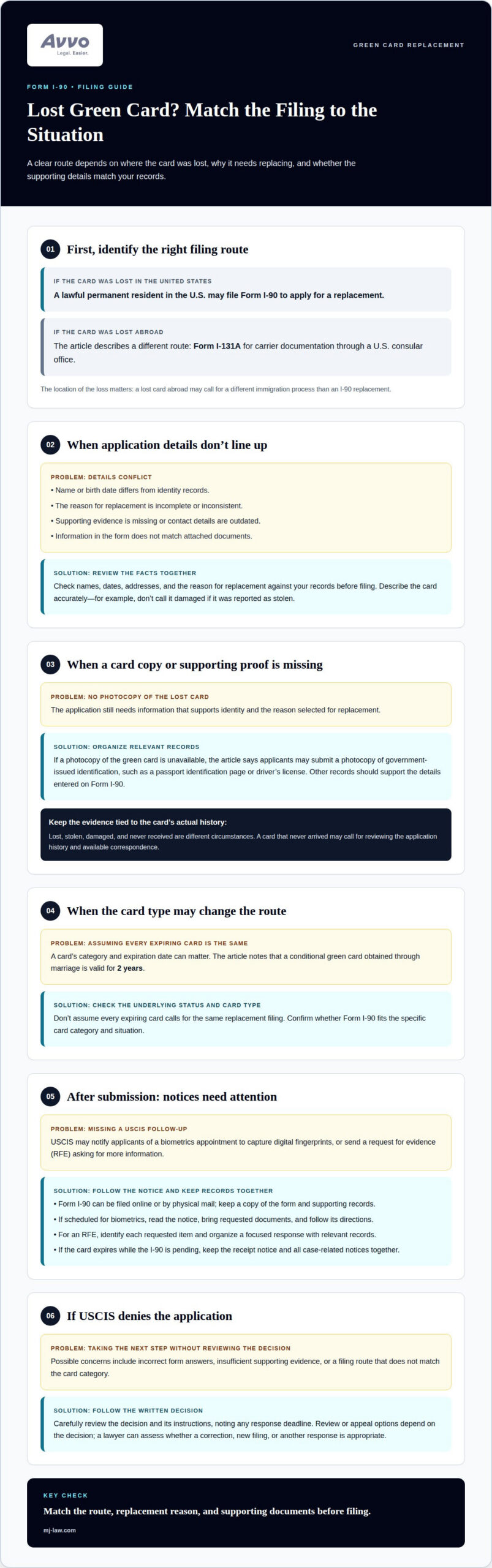
Start by matching the application to where the card was lost and why it needs replacing. According to U.S. Citizenship and Immigration Services, a lawful permanent resident in the United States who loses a green card may file Form I-90 for a replacement. A lost card abroad follows a different path: according to U.S. Citizenship and Immigration Services, the resident may file Form I-131A for carrier documentation through a U.S. consular office. Selecting the correct process is the first important step.
Make sure each answer matches your identity and immigration record. Review names, dates, addresses, and the reason for replacement together before filing. For example, don’t describe a card reported as stolen as damaged. A mismatch between the stated reason and supporting documents can prompt questions or delay review.
If a green card expires while Form I-90 is pending, keep the USCIS receipt notice and every case-related notice together. The receipt notice records that an application was filed; before travel or another time-sensitive use, have an immigration lawyer assess what evidence is appropriate for that situation.
Pay particular attention to the card’s category and expiration date. According to U.S. Citizenship and Immigration Services, a conditional green card obtained through marriage is valid for 2 years. That detail matters because an applicant should not assume that every expiring card calls for the same replacement filing. The underlying status and card type help determine whether Form I-90 fits the situation.
Before submission, review the form for common problems, including:
- A name or birth date that differs from identity records.
- An incomplete answer about whether the card was lost, stolen, or damaged.
- Missing supporting evidence for the reason selected.
- Outdated contact details that could prevent receipt of USCIS notices.
- Inconsistent information across the application and attached documents.
An RFE, or request for evidence, means USCIS needs more information to assess the filing. Read the notice carefully, identify each requested item, and organize a focused response with relevant records. An immigration lawyer can help clarify what the notice asks for and keep the response on point. Avoid sending unrelated documents that don’t address the stated concern.
If USCIS denies the application, carefully review the written decision before taking another step. Common concerns include incorrect form answers, insufficient supporting evidence, or a filing route that doesn’t match the card category. Review or appeal options depend on the decision and its instructions, so note any response deadline in the notice. A lawyer can assess whether a correction, new filing, or another response is appropriate.
Filing Form I-90
According to U.S. Citizenship and Immigration Services, a lawful permanent resident in the United States who lost a green card may file Form I-90 for a replacement. Applicants can submit the filing online or by physical mail.
Required Application Documents
Supporting documentation should fit the reason selected on the petition. If the lost green card’s photocopy isn’t available, applicants may submit a photocopy of government-issued identification. Examples include a passport identification page or a driver’s license. The identification copy helps document identity, while other relevant records can support the details entered on Form I-90.
Organize the application and attachments around the specific reason for replacement. A damaged card, for example, is different from one that never arrived. An attorney can review available records, identify gaps, and ensure the supporting materials relate to the stated filing reason. This focused preparation makes the application easier to follow and clarifies what each document shows.
Help With Missing or Damaged Cards
Yes. An attorney can assess whether the facts involve a lost, stolen, damaged, or never-received card, then help prepare the appropriate Form I-90 filing and supporting documentation. For a card that never arrived, the attorney can review the application history and available correspondence. For a damaged card, the attorney can help organize the evidence that explains its condition.
Different circumstances call for different details, even when the same form may apply. A stolen card, for instance, calls for a different account than a damaged card. Legal review can help you present the facts clearly and determine whether the filing concerns replacement or another issue with your permanent resident status.
After assembling the materials, applicants can file Form I-90 online or by physical mail. The choice affects how the application is submitted, so keep a copy of the completed form and the supporting records. That file provides a reference if USCIS sends a notice or requests follow-up information. Follow the instructions associated with the chosen filing method, and retain the receipt or other filing confirmation.
USCIS may notify Form I-90 applicants of a biometrics appointment to capture digital fingerprints. Read each notice carefully, note its instructions, and keep it with the filing records. If an appointment notice arrives, bring the requested documents and follow its directions. An attorney can help interpret case correspondence and prepare a response when USCIS requests additional information.
For applicants in the Bay Area, legal assistance can be useful when the card’s history is unclear or documentation is incomplete. During a Form I-90 consultation, discuss whether the card was lost, stolen, damaged, or never received, and review which records support the application. A focused review can help clarify the next filing step.
What documents are required for an I-90 replacement application?
The supporting documents for Form I-90 depend on why the green card needs replacing. Start by identifying whether it was lost, stolen, damaged, or never received. Then organize records that support that specific explanation. A clear, consistent set of documents helps USCIS understand the application without confusing unrelated events.
If you have a photocopy of your lost green card, keep it with your application records. If not, applicants may submit a photocopy of government-issued identification, such as a passport identification page or driver’s license. This offers a practical way to document identity when a card copy isn’t available.
Use a simple document review before filing:
- Identity: Gather the government-issued identification copy if you lack a green card photocopy.
- Reason for replacement: Identify records that relate to the loss, theft, damage, or non-receipt.
- Consistency: Compare the explanation in Form I-90 with the supporting records.
- Filing copy: Keep a copy of the completed application and the documents submitted with it.
For example, a damaged card and a card reported lost require different explanations. The documents should support the reason selected on Form I-90, rather than introduce a second account. If the card never arrived, preserve correspondence or filing records that relate to the original card delivery. Those materials can help clarify the timeline presented in the application.
Sort documents by purpose before submitting them. Group identity evidence together, then organize records explaining what happened to the card. Consider whether a document with unrelated details helps explain the stated reason. A focused packet is easier to review than a stack of records without context.
Make sure each copy is readable and complete. A passport identification page, for example, should show identifying details clearly. Keep original records in a separate file unless the application instructions call for an original. A working copy also helps you refer to the same information if USCIS sends a notice about the filing.
No single document list fits every replacement reason. The right supporting evidence turns on the card’s circumstances and the applicant’s available records. Before filing, match each document to a specific answer or explanation in Form I-90. If an attorney helps prepare the application, share the records related to the card and its replacement reason so the filing can be reviewed as a complete, consistent package.
A lawful permanent resident may apply for carrier documentation if their green card has been lost, stolen, or destroyed. Keep your explanation tied to the card’s actual circumstances, without mixing in unrelated events. Review the relevant instructions to see what documentation is requested for your situation, and keep copies of materials you prepare or submit. Focus on clearly explaining what happened and keeping identity information separate from records about the event. If the circumstances are unclear, organize your available records before deciding how to describe them in the application.
How long does I-90 processing take, and how can I check case status?
There isn’t one processing time that applies to every Form I-90 application. USCIS review, application completeness, appointment steps, and requests for more information can affect how a case progresses. A filing with clear answers and supporting records follows a different path from one that needs clarification. Use the current case status, rather than a general estimate, to understand what has happened in your case.
After USCIS receives the application, keep the receipt notice with your copy of Form I-90. The receipt identifies the case and provides a reference for status checks and correspondence. Enter its receipt number in the USCIS online case status tool, following the displayed instructions. Read the result alongside any letters or notices sent about your application.
Look for specific updates, not just a final decision. A status change can indicate that USCIS received the filing, scheduled a next step, or needs action from you. If USCIS sends a biometrics appointment notice, follow its instructions and keep the notice. If it requests evidence, note the response deadline and address each requested item directly.
For a practical tracking routine, take these steps:
- Save the receipt notice and a complete copy of the filed Form I-90.
- Use the receipt number when checking the USCIS case status tool.
- Keep each USCIS notice with the application records.
- Record any appointment date or response deadline shown in a notice.
- Compare new status information with the latest letter from USCIS.
If the online status and a mailed notice seem different, read the notice carefully and follow its instructions. It may provide details that a brief online update doesn’t show. For example, an evidence request explains what USCIS needs, while a status line may only say that action is required. Keep envelopes and copies with the related correspondence.
While the application is pending, keep the card’s expiration date and any upcoming travel or employment-related needs in mind. Don’t assume a status update alone tells you which documents you can use in a particular situation. Keep your receipt and USCIS notices handy, then assess your specific need against the records you have.
Repeatedly checking won’t change a case’s place in USCIS review. Check to see whether USCIS has updated the case or sent a notice requiring action. If the case remains unchanged, keep your records together and respond promptly to any new instruction. This helps you track the filing without missing an appointment, request, or decision.
The U.S. Citizenship and Immigration Services says a permanent resident who has been outside the United States for a year or longer without a valid reentry permit may need to take steps different from filing Form I-90.
When should I hire an immigration attorney for an I-90 application?
Consider legal help when the replacement filing involves more than a straightforward lost card. An I-90 replacement attorney in San Francisco can review the reason for replacement, the applicant’s records, and any USCIS correspondence before preparing a response. This can be especially useful when the card’s history is unclear or identity documents contain different information.
A consultation may help clarify the next step if USCIS sends a request for evidence or denies an application. Bring the notice, the filed Form I-90, and supporting records. The attorney can identify what USCIS is asking for, explain the decision, and assess response options described in the notice. Follow any deadlines and instructions stated in that correspondence.
Legal guidance can also help when the card issue intersects with another immigration matter. For example, an applicant may need to distinguish a card replacement from a question about permanent resident status or a family-based case. An I-90 replacement attorney in San Francisco can review the documents and immigration history to identify whether the immediate issue is the missing card or a broader matter requiring attention.
An attorney’s help may be especially useful in situations such as:
- The green card was never received, and earlier filing records need review.
- A stolen or damaged card requires a clear explanation in Form I-90.
- Names or identifying details differ across the application and government records.
- USCIS has requested more evidence, scheduled biometrics, or issued a decision.
- The applicant is unsure whether the card issue affects another pending immigration matter.
For a straightforward case, an applicant may be able to complete the form without legal representation. The key is understanding the reason for replacement, answering questions consistently, and following the filing instructions. If the case involves conflicting records, prior notices, or an unresolved immigration issue, an attorney can review the details and help bring them together in a clear account before submission.
For a legal review, gather a green card copy, if available, identity records, the completed or filed application, and USCIS notices. A concise timeline can also help: note when the card was lost, damaged, or expected, and list the steps you’ve already taken. This helps the attorney focus on the specific issue instead of piecing together scattered documents.
If a family-based matter is connected to the replacement question, ask how the card filing relates to that broader immigration record. A focused I-90 case consultation can help clarify the application issue, review relevant notices, and identify practical next steps.
MJ Law
MJ Law helps San Francisco and Bay Area residents address green card replacement questions and prepare Form I-90 filings. Turn to the firm when the card was lost, stolen, damaged, or never received, or when USCIS correspondence raises questions about the next step. The review can focus on the card’s history, supporting records, and how the application information fits together.
If your card issue is connected to a family immigration matter, MJ Law can consider that context as part of its immigration representation. The firm also handles Business and Investor Visas, Employment-Based Visas, and Entertainment and Artist Visas. These practice areas may be relevant when a green card concern overlaps with another immigration matter.
To discuss your circumstances and possible next steps, contact MJ Law.
Take the Next Step With a Clear Plan
Your next step is to connect the card issue with the broader picture of your immigration record. Before a conversation, gather any USCIS notices and note what happened to the card, what action you’ve taken, and what remains unclear. That context helps keep the discussion focused on your situation and the decision you need to make.
An I-90 replacement attorney in San Francisco can help assess the application questions and identify practical next steps. If your case includes another immigration concern, mention that as well so the relevant circumstances can be considered together.
Contact MJ Law about Form I-90 to discuss your circumstances and move forward with a clearer plan.
Frequently Asked Questions
What is Form I-90 and who needs to replace a green card?
Form I-90 is the application used to renew a standard green card or replace one that is lost, stolen, or damaged. A lawful permanent resident may need it when the card is missing or unusable, or when a standard card reaches its expiration date. Standard green cards are valid for 10 years. Applicants abroad may need a different process than residents filing for replacement in the United States.
What are common I-90 filing mistakes, delays, or denial risks?
Common risks include choosing a replacement reason that doesn’t match the facts, entering inconsistent identity details, or overlooking a USCIS notice. For example, a transposed digit in your mailing address can interfere with receiving correspondence. Before filing, compare names and contact details across the application and your records. Keep copies of submitted materials, then review each new notice promptly so you don’t miss a request or appointment.
How can I find and compare reputable I-90 attorneys in San Francisco?
Compare attorneys by their immigration experience and whether they can review your replacement reason, supporting records, and filing path. The law office says it has focused on immigration law since 2014, and Fariba Faiz has more than 28 years of immigration law experience; employers may request a complimentary introductory consultation lasting 15 minutes.