
A naturalization denial does not automatically cancel your green card or put you at risk of deportation. To seek review of a USCIS naturalization decision, you must file Form N-336, the Request for a Hearing on a Decision in Naturalization Proceedings, according to U.S. Citizenship and Immigration Services. A citizenship denial appeal lawyer in San Francisco can help you understand which review option fits the reasons for your denial.
A denial can raise urgent questions: Was it based on missing evidence, a legal error, or an eligibility issue that could affect a future application? First, distinguish an appeal, which challenges the decision, from a motion, which asks USCIS to reopen or reconsider it.
This article explains what may happen after a denial, how appeals and motions differ, and why deadlines, evidence, and filing choices matter. It also outlines potential immigration risks to consider before responding, so you can approach your next steps with a clearer understanding of the process.
Key Takeaways
- Start by identifying the specific reasons USCIS gives for denying your application; they shape which response may fit.
- USCIS generally requires an appeal within 30 days from the decision date, according to U.S. Citizenship and Immigration Services, so note the date and act promptly.
- Match your supporting evidence to the issues in the denial rather than submitting documents without explaining their relevance.
- Before filing, understand how an appeal, a motion, or a future application addresses your circumstances differently.
- When speaking with a lawyer, ask how they would assess the denial, develop the record, and account for potential immigration consequences.
What Happens If I Am Denied Naturalization?
A naturalization denial identifies concerns about eligibility or other issues in your application. Start by reviewing the written decision, since its specific reasons should guide your response.
Common Reasons for Naturalization Denial
Naturalization applications may be denied when the applicant does not meet residence or physical-presence requirements. U.S. Citizenship and Immigration Services states that applicants generally must have resided in the United States for the last five years. For general eligibility, physical presence generally must total at least 30 months.
Marriage-based applicants face different residence and physical-presence benchmarks: three years of residence and 18 months of physical presence. A denial may reflect a concern that the application does not establish the applicable requirement. Compare the decision’s stated reason with your eligibility history and supporting records before choosing a response.
Appealing a Naturalization Denial
An appeal asks USCIS to review its naturalization decision through an administrative hearing. USCIS generally requires an appeal within 30 days from the decision date, according to U.S. Citizenship and Immigration Services. The denial notice’s date and explanation therefore matter when determining the next filing step.
A request for administrative review must be mailed to the USCIS district office that denied the application. Identify the specific factual statement or legal conclusion you believe is wrong. This focuses the review on the decision’s reasoning instead of simply repeating your original application.
Form N-336 and Denial Decisions
Form N-336, the Request for a Hearing on a Decision in Naturalization Proceedings, is the form used to seek review of a USCIS naturalization decision. A person seeking review must file Form N-336, according to U.S. Citizenship and Immigration Services. The form begins the administrative review process.
Use the denial notice to identify what the appeal should address, such as a disputed fact or legal conclusion. USCIS does not require an appeal brief, but the appellant must specifically identify any erroneous conclusion of law or statement of fact. If an attorney or another representative acts for you, submit Form G-28 with the appeal.
Choosing a Citizenship Denial Appeal Lawyer
A citizenship denial appeal lawyer in San Francisco can assess the written decision, application record, and possible responses. Ask how the lawyer would connect each reason for denial to relevant evidence or an alleged factual or legal error. A focused explanation helps you understand the proposed approach before deciding how to proceed.
Ask who will prepare and review the filing, how the deadline will be tracked, and which documents are needed. Bring the denial notice, application materials, and records related to the concerns identified. For example, residence and travel records may clarify a disputed eligibility timeline. Discuss potential immigration consequences as well as the appeal strategy.
Difference between appeals and motions
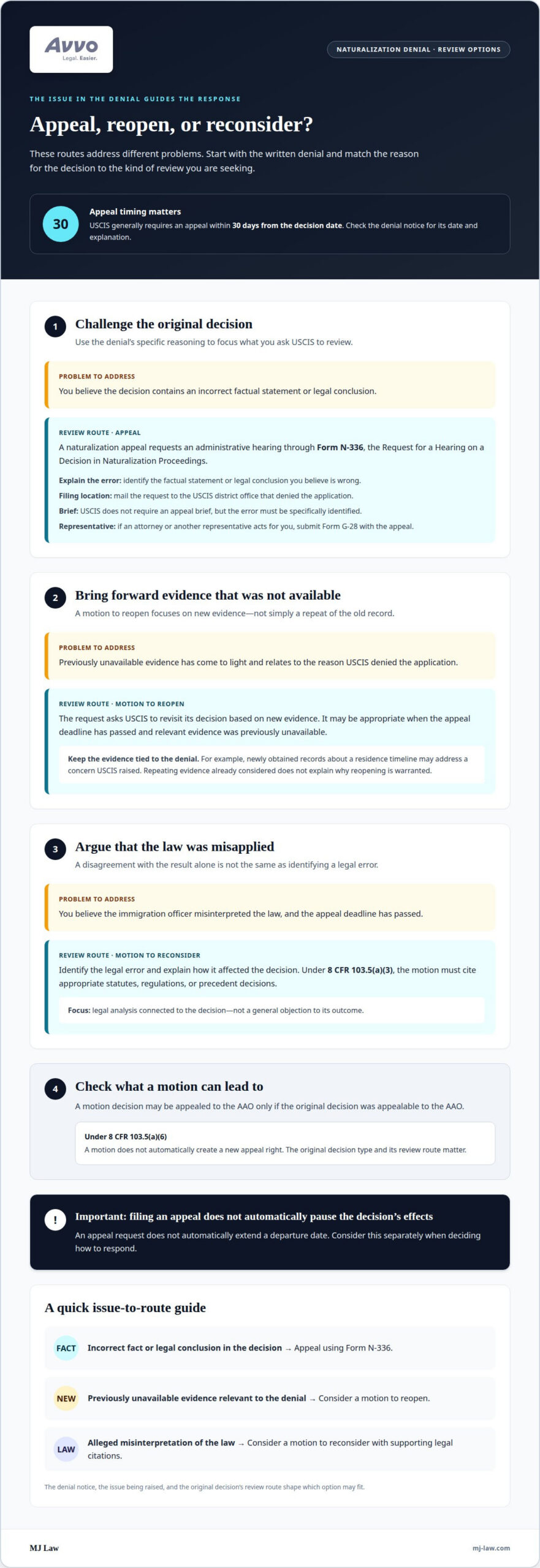
An appeal asks a reviewing body to examine a decision; a motion asks the agency to revisit its own decision. The distinction matters because each route addresses a different issue. An appeal challenges the decision through an available review process. A motion to reopen focuses on new evidence, while a motion to reconsider argues that the decision applied the law incorrectly.
For a naturalization denial, the administrative review route uses Form N-336. A motion is not simply another name for that hearing request. Before preparing either filing, compare the denial’s reasoning with the issue you want reviewed. For example, newly available records may support reopening, while an alleged legal misinterpretation points toward reconsideration.
A motion to reopen may be appropriate if the appeal deadline has passed and previously unavailable evidence has come to light. The new material should address the reason for the decision. For example, if USCIS questioned a residence timeline, newly obtained records relevant to that timeline may support the request. Repeating evidence already considered does not explain why reopening is warranted.
A motion to reconsider may fit when the appeal deadline has passed and you believe the immigration officer misinterpreted the law. The argument should identify the legal error and explain how it affected the decision. Under 8 CFR 103.5(a)(3), a motion to reconsider must cite appropriate statutes, regulations, or precedent decisions. A general disagreement with the outcome does not provide that legal analysis.
Appeals and motions also differ in what can follow. Under 8 CFR 103.5(a)(6), a motion decision may be appealed to the AAO only if the original decision was appealable to the AAO. That condition makes the underlying decision important: a motion does not automatically create a new appeal right. Identify the original decision type and its review route before relying on a later appeal.
Use the denial notice to frame the choice: is the central issue new evidence, a legal error, or a challenge to the original decision? Keep the supporting records and legal reasoning tied to that issue. A citizenship denial appeal lawyer in San Francisco can help assess which route fits the decision and organize the argument. You can discuss naturalization review options with an immigration lawyer.
Effect of filing an appeal on a decision
Filing an appeal requests review, but it doesn’t automatically pause the decision’s effects or extend a departure date. Attorney fees for an N-400 denial appeal depend on the case and are provided after a quote request; cost factors include the record, evidence, and work involved.
Appeal Fees and Hearing Timelines
These are separate from attorney fees, which depend on the work involved in the case. Consider the filing fee when weighing an appeal, and leave time to prepare a complete submission.
Filing doesn’t delay a decision from taking effect or extend a previously set departure date. The appeal requests review; it doesn’t, by itself, suspend those consequences. A hearing within 180 days is a stated schedule, not a reason to postpone preparing records or addressing another immigration deadline.
For administrative review, mail the request to the USCIS district office that denied the application. Keep the denial notice and filing records together. The office named in the decision determines where the request should go, so sending it elsewhere risks filing with the wrong location.
Appealing or Ref filing
An appeal challenges the denial, while refiling means submitting a new naturalization application. The right choice depends on the stated reason for denial and whether a new application can address it. If the decision rests on a disputed conclusion, review may focus on that error. If an eligibility concern remains unresolved, a new application may need different supporting records.
Compare the original record with USCIS’s stated reason for denial. For example, if the decision questions whether the evidence establishes an eligibility requirement, consider whether additional documentation can address the gap. An appeal seeks review of the existing decision; refiling asks USCIS to assess a new application.
Neither route should be chosen by default. Consider whether the denial identifies an error to challenge, whether relevant evidence has changed, and whether filing again addresses the stated concern. A request for judicial review is another distinct route: after a final administrative denial, the petition must be filed within 120 days.
Appeal Filing Deadlines
USCIS generally requires an appeal within 30 days from the decision date, according to U.S. Citizenship and Immigration Services. The date on the notice matters, so record it and identify the applicable filing deadline immediately. A late filing can affect access to administrative review.
When USCIS mails a decision, an additional 3 days to file may apply. Some cases, such as revocation of a petition approval, can have a 15-day deadline. Those examples don’t replace the naturalization deadline; read the notice and distinguish an N-400 denial from other immigration decisions.
For a naturalization denial, mail the administrative request to the USCIS district office that issued the denial. Keep proof of what you sent and when. If you’re weighing an appeal, refiling, or judicial review, discuss your naturalization case with an immigration lawyer before the applicable deadline.
Appeal briefs and supporting evidence
A focused appeal connects the decision’s reasoning to the facts or law you want reviewed. Organize each argument around a specific issue identified in the decision.
Preparing an Appeal Brief
An appeal brief explains why the reviewing body should change or reconsider a decision. A clear argument separates the conclusion being challenged from background information. For a naturalization denial, address each relevant statement or conclusion in the notice, then explain the specific error you believe USCIS made.
USCIS doesn’t require an appeal brief, but the appellant must identify any erroneous conclusion of law or statement of fact. Even a short, organized explanation can clarify the requested review. Identify the disputed finding, explain why it conflicts with the record, and point to the documents that support your position.
Tie each claim to the decision. If USCIS relied on a particular date or record, address that point directly rather than submitting a broad narrative. Separate factual disagreements from legal arguments, and explain how each alleged error affected the outcome. This gives the reviewer a clear path through your appeal.
Supporting an Appeal With Evidence
Supporting evidence consists of documents that substantiate the factual claims in an appeal. Its value depends on how directly it addresses the reason for denial. If USCIS questioned a date in your application, for example, provide records that clarify the date and explain their relevance.
For an appeal to the AAO, supporting documentation may accompany the appeal or be submitted directly to the AAO within 30 days after filing. This timing applies to AAO appeals; don’t assume it governs every naturalization review. A Form N-336 request follows its own filing process, so identify the reviewing body before relying on an evidence deadline.
Build a clear record by sorting documents according to the issue they address, labeling them, and explaining what each establishes. If two documents appear inconsistent, explain the difference rather than leaving the reviewer to reconcile them. A timeline can connect records to disputed events, while a brief note can clarify why a document matters.
Before submitting, compare every argument with the denial notice and supporting record. Remove documents that do not advance a relevant point, and ensure each key assertion has an evidentiary basis. This alignment helps the reviewer assess the alleged error without confusing new context with the central issue.
How can a San Francisco citizenship denial appeal lawyer help, and what should you ask when hiring one?
A lawyer can review the denial, compare it with your application record, and assess the available responses. The review should connect each proposed argument to a specific statement in the decision, document, or legal issue.
How a Lawyer Can Assess Your Case
Start with the denial notice and the materials USCIS considered. A lawyer can separate disputed facts from legal conclusions and identify the records that support each point. If the decision questions a date, for example, the lawyer can compare the notice with your application and relevant records.
Next, match the issue with a procedure. An administrative hearing request, a motion to reopen, and a motion to reconsider address different circumstances. A lawyer can explain why the decision’s reasoning points toward a particular route and what evidence or legal analysis it requires.
Preparation also means organizing a complete filing. The lawyer can review supporting documents, identify gaps or inconsistencies, and explain how each item relates to the denial. If a representative files for you, Form G-28 accompanies the naturalization appeal. A careful review helps keep the filing focused on the issues USCIS actually raised.
Questions to Ask Before Hiring
Use your first discussion to understand the proposed work and communication process. Ask direct questions and look for specific answers tied to your denial notice:
- Which statements or conclusions in my USCIS decision would you analyze first?
- Would you assess an appeal, a motion, or another response, and why?
- What records would help address the concerns identified in my decision?
- Who would prepare and review the filing, including Form G-28 if needed?
- How will you track filing requirements and keep me informed about next steps?
Ask the lawyer to explain the reasoning in plain language. If the denial cites a disputed fact, for example, ask which record could clarify it and how the argument would address USCIS’s conclusion. If the issue involves interpreting the law, ask what legal basis supports the proposed challenge. These questions help you assess the strategy, not just the service.
Bring the denial notice, your application copy, and documents related to the stated concerns. A citizenship denial appeal lawyer in San Francisco can use those materials to discuss possible arguments and the work involved. For a case-specific conversation about your naturalization decision, schedule a consultation with an immigration lawyer.
MJ Law: Family Immigration Services
MJ Law provides Family Immigration Services for people addressing immigration matters involving relatives. If a naturalization denial also raises questions about a spouse’s or family member’s immigration plans, keep those issues separate from the denial appeal. A family-based matter does not replace the process for challenging a USCIS decision; each requires attention to its own facts and documents.
Consider discussing family immigration needs if your next steps involve a relative’s immigration situation alongside your citizenship concerns. MJ Law can help you understand the family immigration matter and its relevant documents, while you address the naturalization decision through the appropriate review process.
For help with a family immigration matter, contact MJ Law.
Make Your Next Decision With a Clear Plan
A denial can leave important questions about what to do next. Before acting, gather the decision notice, the materials submitted with your application, and any records related to the concerns raised. Keeping these documents together makes it easier to explain your priorities and understand what information may shape the discussion.
A citizenship denial appeal lawyer in San Francisco can help you consider how the decision affects your options and which questions to address first. Bring a concise timeline of key events and note any family or immigration circumstances that could affect your plans. A focused conversation can help turn uncertainty into clearer next steps.
MJ Law works with people on U.S. citizenship and naturalization matters, as well as family immigration, business and investor visas, and employment-based visas. If you’re ready to discuss your denial and the path ahead, contact MJ Law about your denial.
Taking time to understand the decision is a practical first step toward moving forward thoughtfully and confidently.
Frequently Asked Questions
Can you appeal a denied U.S. citizenship (N-400) application?
Yes. A person seeking review of a USCIS naturalization decision must file Form N-336, according to U.S. Citizenship and Immigration Services. The hearing request lets you challenge the decision’s reasoning through administrative review. Before filing, identify the specific finding you dispute and gather records that directly address it. For example, if USCIS questioned a residence period, organize documents that clarify the relevant timeline.
What is the deadline to appeal an N-400 denial using Form N-336?
USCIS generally requires an appeal within 30 days from the date of the decision, according to U.S. Citizenship and Immigration Services. Use the date on the denial notice to calculate the period and plan the filing promptly. If the decision was mailed, an additional 3 days may apply. Keep the notice and proof of mailing together so the filing timeline is documented.
How do you file Form N-336 and what documents are required?
File Form N-336 with the USCIS district office that denied the naturalization application. Review the denial notice, complete the hearing request, and explain which factual statement or legal conclusion you believe is wrong. Attach evidence that supports the specific challenge. If an attorney or another representative is involved, include Form G-28. Keep a complete copy of the filing and its supporting records for your own files.
What are the filing fees for Form N-336 and are fee waivers available?
Don’t assume a fee waiver applies to this filing. Before submitting the request, determine under USCIS instructions whether a waiver is available for your circumstances. Include the required payment or waiver materials, as applicable. Address fee questions early, since resolving them after preparing the appeal may leave less time to complete the submission.
How long does a citizenship denial appeal take in San Francisco?
A naturalization appeal hearing is scheduled within 180 days after the appeal is filed. The timeline can also involve preparing the request, assembling evidence, and completing the initial review. Keep copies of the filing and any USCIS correspondence so you can follow the case’s progress. If USCIS requests information or schedules a hearing, respond to the notice and prepare around the issues identified.
Can you appeal an N-336 decision in federal district court, and what are the deadlines?
After a final administrative denial, you may seek judicial review in federal district court by filing a petition within 120 days. The court reviews a citizenship application denial de novo, meaning it considers the matter from the beginning. This is a distinct court proceeding, not simply another USCIS form. Preserve the final decision and administrative record, and treat the court deadline separately from earlier filing dates.
What are alternatives to appealing an N-400 denial, such as reapplying or filing a new application?
Reapplying may be an alternative if you can address the eligibility concern that led to the denial. A motion to reopen may fit when previously unavailable evidence becomes available, while reconsideration focuses on an alleged legal misinterpretation. An applicant denied because of a minor crime committed within five years of applying may be able to reapply after the five-year mark, if no other grounds for denial apply.
What are common reasons for N-400 denial and how can applicants address them on appeal?
Residence or physical-presence eligibility concerns can lead to a naturalization denial. General applicants generally need five years of U.S. residence and at least 30 months of physical presence; marriage-based applicants generally need three years of residence and 18 months of physical presence. On appeal, identify the specific eligibility finding in the decision and organize records that address the relevant period or disputed facts.