
The filing window matters: if you have a two-year conditional green card through marriage, removing conditions means filing Form I-751 to request permanent residence without conditions. According to U.S. Citizenship and Immigration Services, you must file during the 90 days before your card expires. A conditional green card removal lawyer in the Bay Area can help you understand how your marriage evidence and filing circumstances fit the petition.
It’s understandable to feel uncertain about what USCIS expects, especially if your relationship or circumstances have changed. The purpose of Form I-751 is to show that the marriage was genuine, and the evidence you submit should support that account clearly.
This guide to a conditional green card removal lawyer in the Bay Area explains what removing conditions means, how joint petitions differ from waiver requests, what marriage evidence may help, and how to identify your filing window. It also covers what to consider if the marriage has ended or your card’s expiration date is approaching.
Key Takeaways
- Removal of conditions requires filing Form I-751 to move from conditional to permanent residence without conditions.
- Mark the filing window on your calendar: the petition is due during the 90 days before your conditional green card expires.
- Organize records that show your marriage was genuine, and consider how your circumstances affect the evidence you submit.
- If you can’t file jointly because of divorce, a spouse’s death, or abuse, learn whether a waiver of the joint filing requirement may apply.
- Understand how legal support can help you prepare a petition that fits your circumstances and address USCIS requests.
What Does Removal of Conditions Mean?
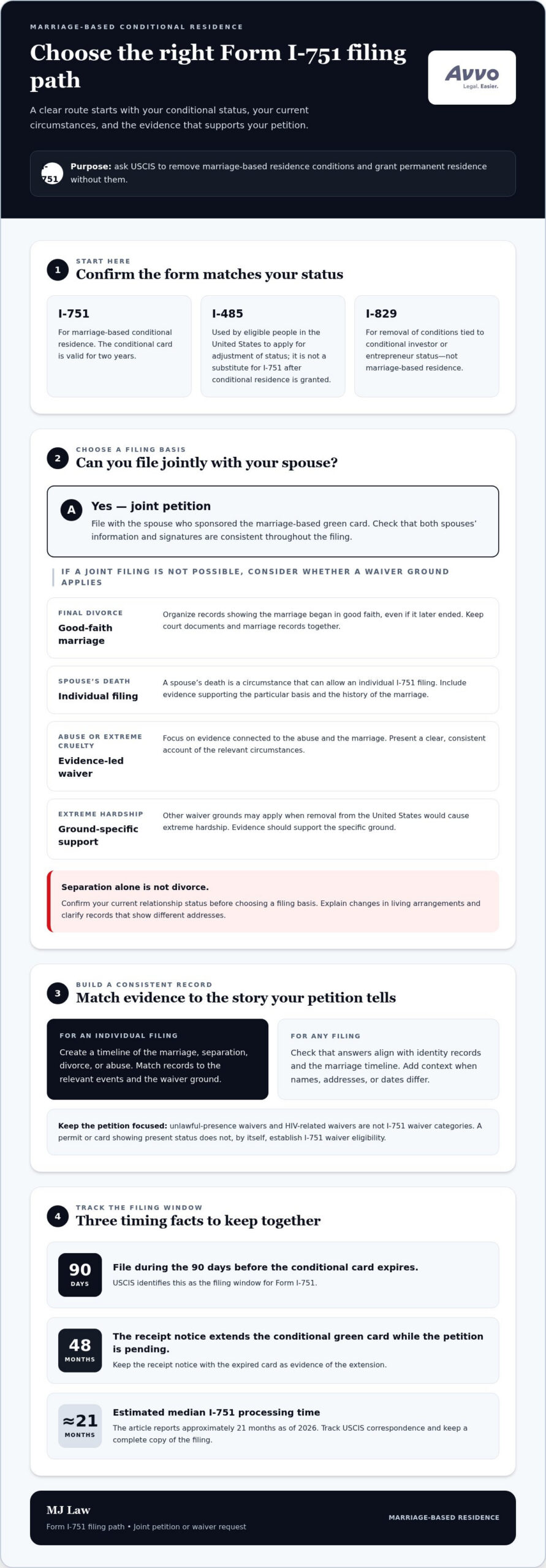
Removal of conditions asks USCIS to grant permanent residence without the marriage-based conditions. Form I-751 can be filed jointly or, when a qualifying ground applies, with a waiver of the joint filing requirement.
Divorce and Abuse Waivers
A conditional resident may seek an I-751 waiver after a divorce, a spouse’s death, or abuse or extreme cruelty. The relevant ground shapes what the petition must establish. For a divorce waiver, organize records showing the marriage began in good faith, even if it later ended. For an abuse-based waiver, focus on evidence connected to the abuse and the marriage. Each filing should present a clear, consistent account.
Joint Petitions and Separation
A joint petition is filed with the spouse who sponsored the marriage-based green card. Separation alone is not divorce, so confirm your current relationship status before choosing a filing basis. If your divorce is final, you may request a waiver instead of filing jointly. Keep court documents and marriage records together, and explain any changes in your living arrangements.
Other waiver grounds may apply when the marriage ended, or when removal from the United States would cause extreme hardship. A spouse’s death is another circumstance that can allow an individual filing. These routes still require evidence supporting the particular ground and the history of the marriage. A permit or card showing present status does not, by itself, establish eligibility for an I-751 waiver.
Unlawful presence waivers address a different immigration issue. They do not replace Form I-751 or remove marriage-based conditions. Likewise, an HIV-related waiver is not an I-751 waiver category. If a separate immigration application raises an inadmissibility or health-related issue, it follows that application’s requirements. Keep the petition focused on its purpose: documenting the qualifying basis for removing conditions.
Evidence organization matters in an individual filing. Create a timeline of the marriage, separation, divorce, or abuse, then match records to the relevant events. Include a concise explanation when records appear inconsistent, such as different addresses during a period of separation. For a filing fee, U.S. Citizenship and Immigration Services says an individual may qualify for an immigration application fee waiver if household income is below 150% of the poverty guidelines.
Removing conditions concerns permanent resident status, not naturalization itself. Once conditions are removed, a person may later consider naturalization if they meet its separate requirements. Start by identifying whether a spouse can file jointly, whether a waiver ground fits, and which records support that choice. That sequence helps keep the I-751 focused and complete.
Form I-751 petition to remove conditions on residence
Form I-751 is the petition used to request removal of marriage-based residence conditions. Its purpose and evidence differ from investor filings and initial green card applications.
I-751 Eligibility and Purpose
A spouse may receive conditional permanent resident status when the marriage was less than two years old before applying for a green card. The conditional card is valid for two years. Form I-751 asks USCIS to remove those conditions and grant residence without them. Before preparing the petition, identify the basis for filing and whether the spouse will file jointly or individually.
Form I-485 serves a different stage: eligible people physically present in the United States use it to apply for adjustment of status when an immigrant visa number is available. It is not a substitute for I-751 after conditional residence has been granted. If children have related immigration records, organize their documents separately and keep names and dates consistent across each application.
I-751 Petition Details
Treat the I-751 as a complete petition, not just a signed form. Assemble the required form, supporting documents, and filing components into a clear package. Check that answers match identity records and the marriage timeline. If a document uses a different name or address, include context so the record can be understood alongside the rest of the filing.
For a joint case, both spouses’ information and signatures should be consistent across the filing. An individual filing needs a basis for waiving the joint requirement and evidence supporting that ground. USCIS may request more evidence before deciding, so keep a complete copy of your submission and organize records to make any response easier.
Form I-829 applies to conditional investors or entrepreneurs, rather than marriage-based conditional residents. The filing addresses removal of conditions tied to investor status. Choosing the correct form starts with identifying how conditional residence was obtained: marriage-based status points to I-751, while conditional investor status points to I-829. Mixing those pathways can lead to an application that does not address the basis of residence.
After USCIS receives an I-751, the receipt notice extends the conditional green card for 48 months while the petition is pending. The estimated median processing time is approximately 21 months as of 2026. Keep the receipt notice with the expired card as evidence of the extension. Track USCIS correspondence and update your records when the agency issues a request or appointment notice.
A focused review before filing can catch mismatched dates, missing signatures, or documents that need explanation. Prepare a checklist for the form, supporting records, and copies, then review the full package in order. If your situation involves an individual waiver, investor status, or related I-485 records, a consultation about your immigration petition can help clarify which filing path fits.
Joint I-751 filing and bona fide marriage evidence
A joint petition should connect your shared account of the marriage with records of your life together. Organize evidence to show the marriage was genuine and the information is consistent.
Joint I-751 Filing
Both spouses file Form I-751 together when the marriage continues and they are seeking removal of conditions jointly. Review the form as a shared record: names, addresses, dates, and answers should align with supporting documents. For example, if one spouse’s records show a different residence, explain the circumstances rather than leaving an apparent inconsistency unexplained. A clear, accurate submission helps USCIS understand the couple’s situation.
Evidence of a Bona Fide Marriage
Choose records that show how the couple built a shared life, not just that a marriage certificate exists. Joint leases, household bills, insurance, tax records, and bank statements can document shared responsibilities. USCIS may request the past 12 months of joint checking or savings account records at an I-751 interview. Add a short description to each record so its connection to the marriage is easy to follow.
Useful evidence may include photographs, travel records, and messages showing ongoing communication. Choose examples from across the relationship rather than many documents from one short period. If you had separate finances or addresses, explain why and provide other records that reflect your partnership. The goal is a coherent account of the marriage, not a pile of unrelated paperwork.
Evidence Packets
Arrange the evidence packet so USCIS can review it efficiently. Put the completed petition and supporting documents in a logical order, then group records by subject, such as housing, finances, insurance, and family life. Use brief labels and a contents page to show what each group demonstrates. Keep a full copy of the filing so both spouses can refer to the same record.
Consistency matters across forms and evidence. Compare dates and addresses on the I-751 with lease records, tax documents, and other applications. If a document reflects a temporary move or a name change, include a concise explanation with the relevant record. For couples with children, records showing shared caregiving or family activities may add context, but the petition should still clearly document the spouses’ relationship.
USCIS may issue a Request for Evidence before making a final decision. Read the request closely, identify each requested item, and respond with documents that address those points directly. A focused response is easier to assess than a second packet containing unrelated material. Keep copies of the response and its supporting records with the original I-751 filing.
If USCIS denies the petition, possible next steps include a motion to reopen, an appeal to the Administrative Appeals Office, or refiling with corrected information. The denial notice and its stated reasons help determine which response is appropriate. A joint filing seeks lawful permanent residence without conditions; well-organized evidence helps connect your records to that request.
Bay Area immigration legal services
A Bay Area immigration matter may involve a federal petition, local records, and family circumstances that change over time. For an I-751, an attorney’s role can include reviewing the filing basis, organizing supporting documents, and preparing a response if USCIS asks for more evidence. Keep the petition’s purpose distinct from other immigration matters, such as asylum applications.
To check an immigration lawyer’s California license and disciplinary history, look up the attorney by name in the State Bar of California’s public attorney directory. Review the license status and any public discipline information, and compare identifying details to make sure you have the right attorney.
Local details matter because Bay Area residents may need records from different addresses, workplaces, schools, or county offices. Create a timeline of those locations and note which documents support each period. If you moved during the marriage, explain the move and connect it to relevant records.
A conditional green card removal lawyer in the Bay Area can help organize that record around the I-751 question. Useful preparation begins with the conditional card, the receipt notice, the marriage timeline, and the filing basis. Keep originals safely stored and make clear copies for review. A dated index can help connect each document to the fact it supports.
Immigration law also covers distinct routes, including family petitions, employment-based matters, investor visas, and asylum. Those categories involve different forms and eligibility questions. For example, an asylum case concerns protection, while an I-751 concerns conditions on marriage-based residence. If a family has more than one pending matter, list each application separately and track its notices and deadlines.
Before an attorney consultation, prepare a concise case summary. Include when your conditional residence began, your current marital situation, prior USCIS correspondence, and any address changes. Bring relevant forms and copies of evidence, such as shared household records or court documents. This gives the attorney a clear starting point to identify questions and explain procedural next steps.
When choosing legal support, focus on how the attorney will handle your filing. Ask how evidence will be reviewed, how inconsistencies will be addressed, and who will prepare responses to USCIS notices. A clear process identifies the records needed, who will collect them, and how updates will be communicated.
Bay Area residents can also consider practical coordination: secure document transfer, clear communication, and preparation for any USCIS appointment. Keep a dated folder for every notice and submission. If an asylum matter or another immigration issue overlaps with an I-751, explain that connection early so the attorney can assess how the records fit together without treating separate applications as interchangeable.
Filing during the 90-day period before a conditional green card expires
A conditional green card is valid for two years, and Form I-751 requests removal of its conditions. According to U.S. Citizenship and Immigration Services, a conditional permanent resident must file Form I-751 during the 90 days before the card expires to remain a permanent resident.
I-751 Filing Window
Use the expiration date printed on your card to identify the filing window. Mark the first eligible filing day and the expiration date, then prepare the petition early enough to review signatures and supporting records. A Bay Area address doesn’t change the federal deadline. The same 90-day filing period applies to conditional residents across the United States.
Expiration and Filing Deadlines
An expired card and an unfiled petition can create serious status concerns. If the deadline has passed, a late Form I-751 may be accepted with a written explanation showing good cause. Explain the reason for the delay clearly and include records that support the explanation. Keep copies of the card, petition, and any USCIS notices together.
Filing I-751 is not an adjustment of status application. It addresses conditions on existing permanent residence; adjustment of status is a separate process for eligible applicants seeking a green card. A conditional resident who wants citizenship must also meet naturalization requirements. Track each process separately rather than treating the I-751 deadline as a citizenship filing date.
Filing Fees and Payment
Confirm the current filing fee and accepted payment method before submitting your petition. A rejected payment can disrupt a filing, so review the payment details and keep the transaction record with your copy of the petition.
Government filing fees are separate from legal-service charges. If cost is a concern, check whether an immigration application fee waiver may apply to your household situation. Do not rely on an old saved checklist for payment details; follow the current filing instructions.
Required Filing Documents
Prepare the completed Form I-751, the conditional resident’s green card copy, and records supporting the filing basis. Joint applicants can gather shared financial, housing, insurance, and household documents. An individual waiver filing needs evidence tied to its specific ground. Include a brief explanation when names, addresses, or dates differ across records.
Before sending the petition, compare every form answer with the supporting documents. Check signatures, organize evidence by topic, and keep a complete copy. The receipt notice extends a conditional green card for 48 months while the petition remains pending, so store it with the expired card for proof of status.
If your filing window is approaching or you need to assess a late petition, schedule an I-751 filing consultation to discuss the deadline and supporting documents.
MJ Law: Family Immigration Services
MJ Law helps conditional residents address marriage-based immigration matters, including preparing joint Form I-751 petitions and organizing supporting evidence. Turn to the firm when you need to assess a filing basis, assemble marriage records, or respond to a USCIS request. If your circumstances involve divorce or abuse, the evidence and filing approach may differ from a joint petition.
For a consultation, gather your conditional green card, USCIS notices, marriage records, and any relevant court documents. A clear timeline of your relationship and filing history helps frame the issues. MJ Law handles family immigration matters, including marriage-based green cards, for clients in San Jose and the Bay Area.
Contact MJ Law to discuss your conditional residence petition and the next steps for your situation.
Take the Next Step With a Clear Plan
Your next step is to turn your immigration records into a focused plan. A conditional green card removal lawyer serving the Bay Area can help assess your filing basis, identify gaps in your evidence, and prepare you for questions about your circumstances. Organized documents and a concise timeline can make the discussion more productive.
MJ Law’s practice includes Family Immigration Services, Business and Investor Visas, and Employment-Based Visas. For a marriage-based residence matter, the key questions are personal: which filing path fits, which records support it, and what needs attention before submission. A careful review can help you approach those decisions with greater clarity.
Contact MJ Law about your I-751 to discuss your situation and possible next steps. Bring your conditional green card, USCIS notices, and key marriage or court records. A clear starting point can help you move forward with confidence.
Frequently Asked Questions
Who Needs to File Form I-751?
A spouse granted conditional permanent residence after a marriage less than two years old before applying for a green card generally uses Form I-751 to seek removal of conditions. The joint petition is filed with the sponsoring spouse. If the relationship or another qualifying circumstance prevents joint filing, the conditional resident can consider an individual filing with a waiver request. Check the green card category and the basis for residence before preparing the petition.
What Happens After You File?
After filing, USCIS sends a receipt notice and may request biometrics, additional evidence, or an interview. Keep every notice with a copy of your submitted petition, and follow the instructions for any appointment. For example, if USCIS schedules biometrics, bring the appointment notice and the identification listed in its instructions. If your mailing address changes, keep USCIS correspondence accessible so you do not miss a request or case update.
What happens if I miss the I-751 deadline?
A late I-751 may be accepted if you provide a written explanation showing good cause for filing after the deadline. Describe the circumstances clearly and include records that support your account, such as correspondence or relevant court documents. Don’t treat a missed date as a reason to abandon the filing. Gather your card, identify the delay, and promptly prepare an explanation addressing why the petition was late.
What happens if USCIS sends a Request for Evidence (RFE)?
An RFE means USCIS needs more information before deciding your petition. Read the notice carefully, separate each request, and tailor your response to it. For example, if USCIS asks for proof of shared finances, provide relevant account records with a brief explanation. Follow the response instructions and deadline printed on the notice, keep a complete copy, and retain proof that you sent the response.
What happens if my I-751 petition is denied?
A denial means USCIS did not approve the petition as filed. Read the decision notice to understand its reasons and determine whether the issue concerns eligibility, missing evidence, or inconsistent information. Possible next steps include a motion to reopen, an appeal to the Administrative Appeals Office, or refiling with corrected information. Keep the denial notice and original filing together so your next submission or review addresses USCIS’s specific concerns.
What happens if Form I-751 is filed late or denied?
Late filing and denial require different responses. For a late petition, provide a written explanation showing good cause, along with supporting records. After a denial, review the decision notice and consider whether a motion to reopen, an appeal to the Administrative Appeals Office, or a corrected refiling addresses the stated reason. Keep the notice, prior submission, and new evidence together, and base your next step on the issue USCIS identified.
Can I file Form I-751 with a waiver if my marriage ended, my spouse died, or I experienced abuse?
Yes. A conditional resident may file individually and request a waiver of the joint filing requirement based on divorce, a spouse’s death, or abuse or extreme cruelty. Connect the chosen ground to relevant records. For example, a divorce-based filing can include final divorce documents and evidence concerning the marriage. Waiver cases require a stronger evidentiary showing than joint filings, so organize records around the basis you claim.
How do I find an experienced conditional green card removal lawyer in the Bay Area?
Look for an attorney who handles marriage-based immigration matters and can explain how the filing basis affects evidence and preparation. Check the attorney’s California license status and public disciplinary history through the State Bar of California’s attorney directory. Ask how the lawyer will review your records, handle inconsistencies, and address USCIS notices. For a San Jose or San Francisco I-751 matter, MJ Law’s Family Immigration Services are relevant to marriage-based cases.