
A reentry permit can support a green card holder’s return after an extended trip, but it does not guarantee admission or determine whether the holder maintained U.S. residence. A reentry permit attorney in San Francisco can help assess how the planned absence and the holder’s continuing ties relate to the application. The permit allows a permanent resident to apply for admission after traveling abroad for up to two years without obtaining a returning resident visa. U.S. Citizenship and Immigration Services (USCIS) says it is usually valid for two years.
That distinction matters: a permit can help with travel planning, but it does not replace the need to show an intention to maintain permanent residence. USCIS considers all relevant circumstances, and applying before departure is an important step when preparing for a prolonged trip.
This article explains what a reentry permit does, the practical benefits it may provide, and how travel history and U.S. ties can factor into an assessment of residence intent. It also covers when to apply before leaving the United States and why applicants need to complete biometrics in the country as part of the process.
Key Takeaways
- USCIS weighs the full picture of a permanent resident’s circumstances when assessing whether they intend to maintain U.S. residence; a yearly return alone carries little weight.
- A reentry permit can support travel plans, but it doesn’t guarantee admission or settle whether permanent residence has been maintained.
- Apply while physically present in the United States, and plan around the required biometrics appointment before departure.
- Review the timing and purpose of your trip early, since leaving for a prolonged period before applying may raise concerns about residence intent.
- Consider how extended travel could affect future naturalization plans as well as your return to the United States.
Factors USCIS considers when assessing intent to maintain permanent residence
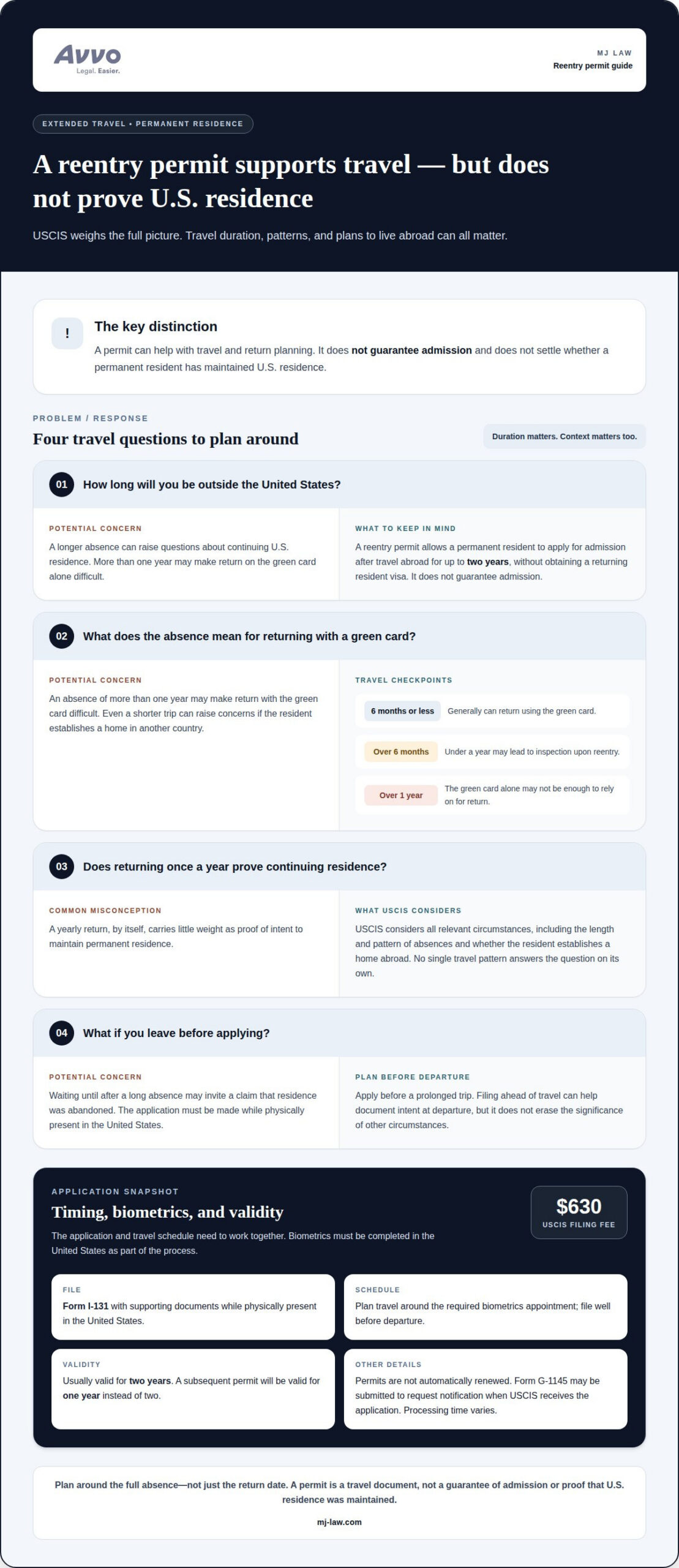
USCIS considers all relevant circumstances when assessing whether a lawful permanent resident intends to maintain U.S. residence. A long absence matters, but no single travel pattern answers that question on its own.
Travel Absences and Status Risks
An absence of more than one year can make returning with a green card difficult because extended time abroad may indicate abandonment of U.S. residence. A trip shorter than one year can also raise concerns if the resident establishes a home in another country. Duration matters, but the circumstances surrounding the absence matter too.
Consider a resident who returns to the United States once a year during repeated periods abroad. That annual return alone says little about whether the person intends to maintain permanent residence. USCIS weighs the broader pattern rather than treating a yearly visit as proof of continuing U.S. residence.
Before a prolonged trip, consider when to apply for a reentry permit. A green card holder who waits until after a long absence may face a claim of abandonment. Applying before travel helps document that the resident did not intend to abandon U.S. status when leaving.
Presumed Abandonment of Residence
Presumed abandonment concerns whether a permanent resident’s actions indicate that they have given up U.S. residence. An absence exceeding one year may make it difficult to return on the green card alone. However, an absence of less than a year can also raise abandonment concerns if the resident takes up residence abroad.
For example, returning once a year does not by itself establish an intent to maintain lawful permanent resident status. USCIS considers the circumstances together, including the length and pattern of absences. The central question is whether the overall facts show a continuing intention to reside permanently in the United States.
Filing a reentry permit application before a prolonged trip can help document the resident’s intention at departure. It does not erase the significance of other circumstances, including an extended absence or residence abroad. Review the travel timeline and any plans to move before departure, rather than relying on one annual return or travel document.
What Is a Reentry Permit?
A reentry permit is a travel document for a permanent resident planning an extended absence from the United States. It addresses some travel and return concerns, but does not guarantee admission.
Long Absences and LPR Status
A green card holder who is absent for six months or less can generally return using the green card. An absence exceeding six months but lasting less than a year may lead to inspection upon reentry. These distinctions make the planned time outside the United States important when assessing travel.
A prolonged trip can affect how officials view a resident’s continuing U.S. status. A reentry permit is especially relevant when travel may exceed a year, since the green card alone cannot be relied upon for reentry after that point. Consider the full planned absence, not just the departure date.
How Reentry Permits Address Long Absences
A reentry permit allows a lawful permanent resident to apply for admission after traveling abroad for up to two years without obtaining a returning resident visa. It documents the trip as temporary for U.S. travel purposes. Still, it does not guarantee admission or resolve every question about maintaining residence.
After an absence of a year or more, a green card holder cannot rely on the permanent resident card alone to return. A permit can provide a travel document in that situation, subject to its validity and the circumstances at entry. Keep its expiration date in mind when planning a return.
Eligibility and Permit Validity
The applicant must be physically present in the United States when applying. According to USCIS, a reentry permit is usually valid for two years. A subsequent permit will be valid for one year instead of two, so repeat travel requires attention to the document’s validity.
A permit is not automatically renewed. A permanent resident seeking another permit has to submit a subsequent application, and being in the United States remains a key requirement. A lawyer consultation can help clarify how planned travel fits with an existing permit.
Applying with Form I-131
Apply by filing Form I-131 with supporting documents while physically present in the United States. Applicants should consider how their biometrics appointment may affect their travel plans. Form G-1145 may also be submitted to request notification when USCIS receives the application.
The current USCIS filing fee for an application filed from within the United States is $630. Processing time varies with USCIS workload and application circumstances. Applicants should file well before departure, then plan travel around the biometrics appointment. For help organizing the application and travel timeline, arrange a reentry permit consultation.
Benefits of a re-entry permit for green card holders
For a lawful permanent resident planning extended travel, a reentry permit provides a travel document in addition to the green card. Its value depends on the trip and the holder’s circumstances. It can help with return planning after a long absence and may serve a separate document purpose for some residents without passports.
One benefit is that the permit documents the trip as temporary for U.S. travel purposes. Applying before a prolonged absence can help establish that the holder did not intend to abandon permanent resident status when departing. That context can matter when travel lasts longer than expected or involves extended time outside the United States.
Consider a green card holder who expects a long stay abroad for family responsibilities. The permit gives the resident a document to present when applying for admission after travel, rather than relying on the green card alone after an absence of a year or more. Keep its validity period in mind when arranging departure and return.
A reentry permit may also serve as a passport for a lawful permanent resident who has no passport and cannot obtain one from their country of nationality. This can matter when the resident needs a travel document but cannot secure a national passport. Its use for that purpose depends on whether the destination country accepts it.
Some countries may accept a U.S. reentry permit as a travel document instead of a passport. Acceptance is not universal, so the document’s usefulness varies by destination. Distinguish between the permit’s role in planning a return to the United States and its possible use for travel to another country.
These benefits address different needs. One holder’s main concern may be documenting a temporary trip; another’s may be having an alternative travel document. To plan, identify the reason for applying, the intended destinations, and the expected time abroad. These details help clarify which benefit matters most.
The permit does not make every long absence a routine return, nor does it replace careful travel planning. Its practical value lies in the document it provides and the temporary-trip context it can establish. Keep it accessible with the green card and other travel papers, especially when the itinerary includes multiple destinations or a prolonged stay.
If travel plans change after applying, compare the new itinerary with the permit’s validity and the original trip purpose. For example, a delayed return may make the expiration date more important than the original departure plan. Keeping these details organized helps you understand how the permit fits the actual journey.
A re-entry permit is therefore most useful when its specific role is clear. It can support return planning after extended travel and, in some cases, provide a passport alternative. The green card holder should consider both needs before departure, rather than assuming one document serves every travel requirement.
Leaving the United States before applying
Yes, an applicant may leave while a reentry permit application is pending, but should wait until completing biometrics in the United States. Leaving before the biometrics appointment may result in denial of the application.
Timing matters because filing Form I-131 and completing biometrics are separate steps. The applicant must be physically present in the United States to apply, and the required digital fingerprinting appointment takes place there. A departure plan should leave enough time to complete both steps before travel begins.
Apply at least 60 days before departure, as advised for reentry permit applicants. File Form I-131 well in advance of the intended trip, rather than treating the filing date as permission to leave immediately. The appointment date affects the practical travel timeline, so build it into plans for work, family responsibilities, or an overseas stay.
For example, a lawful permanent resident expecting to begin employment abroad can plan backward from the departure date. The resident files the application, attends the U.S. biometrics appointment, and then travels. If the appointment falls after the intended flight, leaving first puts the application at risk.
While Form I-131 remains pending, distinguish between having filed and having completed biometrics. Filing alone does not replace the appointment. An applicant who departs before fingerprinting may face denial, so the safest sequence is to remain in the United States through the appointment and depart afterward.
A delayed appointment can affect a carefully planned itinerary. If you have a fixed flight, an overseas work start, or family obligations in another country, account for those dates before filing. Submit the application early enough to allow time for biometrics before the planned departure.
Leaving without a valid permit for an absence exceeding one year can jeopardize a permanent resident’s return. The green card alone cannot be relied upon after an absence of a year or more. This makes the pre-departure sequence especially important for residents planning a prolonged stay outside the United States.
Use a clear timeline: identify the planned departure, file Form I-131 at least 60 days beforehand, attend biometrics in the United States, then travel. If the trip is approaching and the appointment has not occurred, weigh the risk of departing before completing this required step.
For people balancing immigration plans with employment or family needs, the key question is not simply whether an application is pending. It is whether biometrics are complete before departure and whether enough time has been allowed for the filing process.
What are the eligibility requirements for a reentry permit?
The key eligibility point is physical presence: a green card holder applying for a reentry permit must be in the United States. The application is tied to the applicant’s location and planned travel, so filing after departure does not meet this requirement.
Lawful permanent residents and conditional permanent residents planning to remain abroad for more than one year but less than two years may apply. The planned trip length helps determine whether a permit fits the travel need. It does not remove the requirement to apply while physically present in the United States.
For example, a permanent resident planning a prolonged stay abroad can consider the expected departure and return dates before beginning the application. If the resident has already left, the physical-presence requirement is the immediate issue. If still in the United States, the applicant can prepare the filing before travel and arrange to complete biometrics domestically.
Form I-131 is the application used to request a reentry permit. The filing requires supporting documents, and the applicant must attend a biometrics appointment in the United States. These steps are part of the process, not separate eligibility categories. Leaving before biometrics are completed may result in denial, so the application timeline should account for the appointment.
Consider eligibility alongside the purpose and length of the planned absence. A permit may address travel abroad for more than one year but less than two years. It does not guarantee admission or determine every issue related to maintaining permanent residence. Distinguish eligibility to apply from the separate question of how officials assess residence intent.
A useful preparation sequence is to confirm the applicant’s current location, identify the intended period abroad, and organize Form I-131 with its supporting documents. The applicant then plans to complete biometrics in the United States before departure. This sequence keeps the physical-presence requirement and travel timing in view.
Applicants with family responsibilities or employment plans abroad can use the same sequence to organize decisions. For instance, a resident expecting a delayed return can account for the entire anticipated absence, not just the original itinerary. A lawyer can review how the proposed travel schedule relates to the application steps and residence concerns.
If your travel plans are developing, schedule a reentry permit consultation to discuss eligibility, application timing, and the required steps before departure.
MJ Law
MJ Law helps individuals consider how immigration decisions fit their broader plans. If an extended absence may affect your permanent resident status, key issues include travel timing, the application process, and your long-term immigration goals. Reviewing these factors together can help clarify what needs attention before departure.
This perspective can also matter when travel overlaps with family or employment-based immigration plans. A discussion can focus on your circumstances and the steps relevant to your situation, without treating a reentry permit as a guarantee of admission or continued status.
Contact MJ Law to discuss your immigration circumstances and next steps.
Plan Your Next Step With Confidence
Your next step is to connect your travel plans with your broader immigration goals. The timing of an extended absence may affect more than one decision, particularly if family responsibilities, business interests, or employment plans also shape your stay abroad. A thoughtful review can clarify the questions to address before making travel arrangements.
MJ Law’s services include Family Immigration Services, Business and Investor Visas, and Employment-Based Visas. If you’re considering a reentry permit attorney in San Francisco, discuss how your planned travel relates to your immigration circumstances and goals.
Start the conversation before departure plans become difficult to change. Contact MJ Law about your reentry permit questions and take a clear, informed step toward planning your travel.
Frequently Asked Questions
When should you apply for a re-entry permit to the U.S.?
Apply before departure, ideally at least 60 days before your planned trip. You need to be physically present in the United States when filing, and you must complete biometrics there before traveling. For example, if your appointment is scheduled close to your flight, account for that timing before deciding when to leave. An early application gives you more room to plan around the appointment and your travel dates.
What does a U.S. reentry permit allow, and who needs one?
A reentry permit lets a lawful permanent resident apply for admission after an extended trip abroad. It may suit permanent or conditional residents planning to remain outside the United States for more than one year but less than two. For instance, a resident facing a lengthy family or work commitment abroad may consider applying. The permit supports travel planning, but does not guarantee admission or settle every question about maintaining residence.
When must I file Form I-131 and complete biometrics?
File Form I-131 while you’re physically present in the United States and leave time to complete biometrics before departure. Applicants are advised to apply at least 60 days before travel, though filing well ahead is prudent when appointment timing matters. For example, don’t plan an international departure before a scheduled fingerprinting appointment. You may also submit Form G-1145 to request notification when USCIS receives your application.
What are the risks of extended travel abroad for green card holders?
Extended travel can complicate a return and raise questions about whether you maintained U.S. residence. An absence exceeding one year may make reentry on the green card alone difficult. Even a shorter absence can raise abandonment concerns if you establish residence in another country. Returning once a year does not demonstrate continuing intent to reside permanently in the United States, so consider the overall pattern and circumstances of your travel.
How do I choose a reentry permit attorney in San Francisco?
Look for immigration counsel who can explain how your travel timeline, residence history, application, and biometrics fit together. Bring a clear account of planned departures, expected time abroad, and any itinerary changes. MJ Law assists individuals and families with immigration matters, including family and employment-based cases. Its San Jose practice serves clients in the San Francisco area, and consultations are available in English and Spanish. Discuss your specific travel plans with MJ Law.
Which San Francisco attorneys handle reentry permits, and what are their reviews and consultation options?
MJ Law is named as a reentry permit attorney. You can arrange a reentry permit consultation to discuss your travel plans and application.