
An IR1 immigrant visa lawyer in San Francisco can help a spouse understand whether to pursue an immigrant visa through consular processing or adjustment of status in the United States. For marriage-based adjustment of status, applicants must legally prove that their marriage to a U.S. citizen or lawful permanent resident is bona fide under the Immigration and Nationality Act. The appropriate process depends in part on where the spouse is applying from and the details of the case.
It’s understandable to want clear guidance before making decisions that affect your family and future in the United States. This article explains how IR1 immigrant visas differ from adjustment of status, what marriage-based green card services may involve, and when hardship considerations can matter. It also outlines what to discuss with an immigration lawyer serving the San Francisco Bay Area, so you can approach the next steps with a clearer understanding of your options.
Key Takeaways
- Learn how an IR1 immigrant visa differs from adjustment of status and why the spouse’s location matters when assessing the process.
- Understand the central role of showing that a marriage is bona fide in a marriage-based adjustment of status case.
- See how green card services may be available through different organizations, and why it helps to identify support relevant to your specific immigration pathway.
- Find out when extreme hardship to a qualifying U.S. citizen or lawful permanent resident relative may be relevant to an unlawful presence waiver.
- Use the article’s guidance to prepare for a conversation about your family’s immigration goals and the legal help that may fit them.
Are you searching for a top immigration lawyer in San Francisco, California?
Start by matching the attorney’s family immigration work to the process your spouse needs. An IR1 immigrant visa lawyer in San Francisco should be able to explain the petition, consular processing, and the evidence used to document a bona fide marriage.
Family Immigration Experience
Family immigration experience can include spouse petitions, green card applications, and cases involving relatives in another country. San Francisco attorney listings describe experience ranging from 14 to 41 years, but those figures alone don’t show how much work involved IR1 cases. Ask about the attorney’s direct experience with spouse cases, how they prepare relationship evidence, and who will manage each step.
For immigrant union members and their families, distinguish immigration eligibility from access to legal assistance. The Bar Association of San Francisco lists green card services among its offerings for disadvantaged and underserved individuals. During a consultation, ask whether a union-related benefit applies to your situation and which immigration process it covers.
Family Petitions and Consular Processing
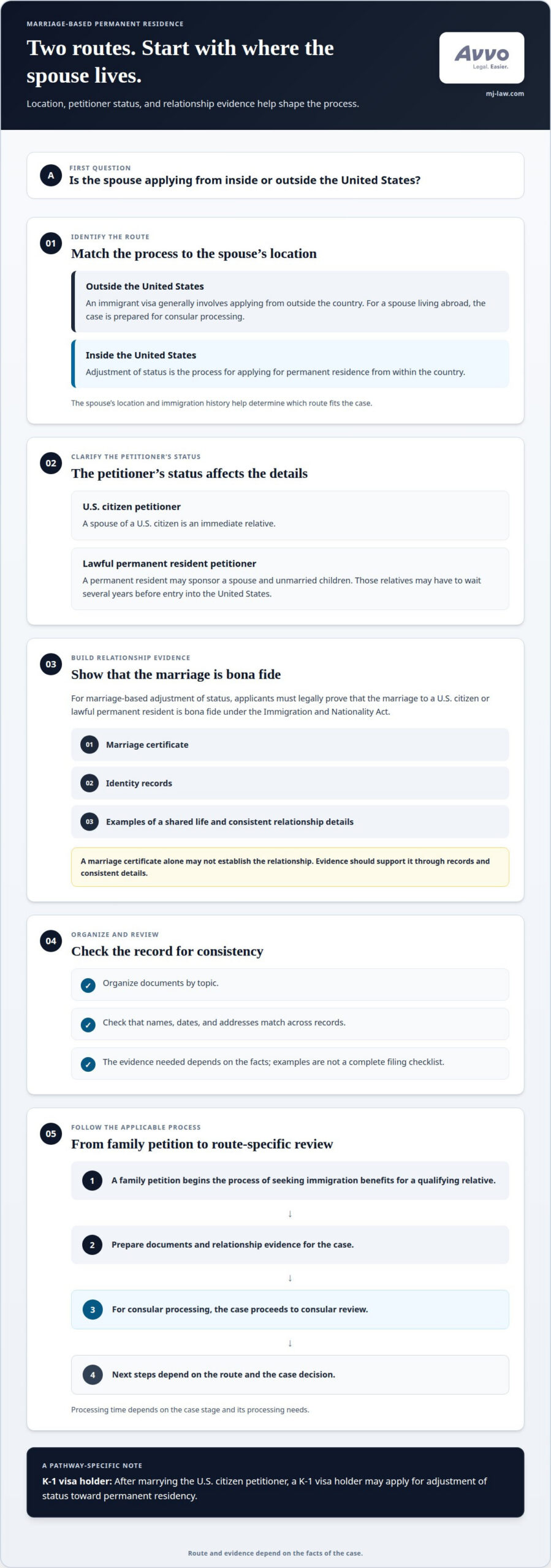
A family petition begins the process of seeking immigration benefits for a qualifying relative. For a spouse living outside the United States, consular processing means preparing the case for review through the U.S. immigration process and the relevant consular stage. Spouses of U.S. citizens are immediate relatives; the details differ when the petitioner is a lawful permanent resident.
Prepare to discuss where each spouse lives, the petitioner’s immigration status, and the couple’s relationship history. Documents may include a marriage certificate, identity records, and examples of a shared life. These are examples to help organize a case, not a complete filing checklist; the evidence needed depends on the facts.
IR1 Lawyer Experience, Reviews, and Services
Compare attorneys by asking how their family immigration practice handles spouse petitions, consular processing, and document preparation. Reviews can help reveal patterns in communication or organization, but they don’t establish an attorney’s IR1 experience. In a consultation, ask who your contact will be, how updates are handled, and what work the legal service covers.
Ask the attorney to explain the application steps, identify the documents they need from you, and describe how they will address gaps or inconsistencies in the record. A useful answer connects each step to your spouse’s location and the petitioner’s status, rather than offering a generic timeline.
What documents are required for an IR1 spouse visa application? Start by organizing the marriage certificate, identity records, and evidence that illustrates the relationship. The case review determines which additional records are relevant to demonstrating that the marriage is bona fide.
What are the current IR1 visa filing fees and other costs? The price depends on the case and is given after a quote request; cost factors include the filing path, the work required, and whether additional legal assistance is needed. Avoid relying on a single figure without understanding what it covers.
What are the steps and timeline for applying for an IR1 visa? The process generally moves from a family petition to document preparation and consular review, followed by the next steps tied to the case decision. Timing depends on the case stage and its processing needs.
How can I find an experienced IR1 immigrant visa lawyer in San Francisco? Look for direct family-based spouse experience, clear explanations of consular processing, and a defined approach to evidence and communication. Use the consultation to compare answers, not just years in practice.
What should I ask a San Francisco IR1 visa lawyer before hiring them? Ask who will handle the case, what services are included, how the attorney assesses relationship evidence, and how you’ll receive updates. Request a clear explanation of the process and the work covered.
Does an IR1 visa lawyer need to be located in San Francisco, or can they represent clients remotely? Remote representation can be an option, with communication and document review handled online. Ask how the attorney will manage your case and whether remote meetings suit your family’s needs.
Immigrant visas and adjustment of status
An immigrant visa and adjustment of status are different routes to permanent residence. An immigrant visa generally involves applying from outside the United States, while adjustment of status is the process for applying from within the country. Your spouse’s location and immigration history help determine which route fits the case.
For marriage-based adjustment of status, applicants must legally prove that their marriage to a U.S. citizen or lawful permanent resident is bona fide under the Immigration and Nationality Act. Evidence should support the relationship through records and consistent details, rather than relying on a marriage certificate alone. Organize documents by topic and check that names, dates, and addresses match before filing.
Family circumstances can change which immigration route is available. A U.S. permanent resident may sponsor a spouse and unmarried children, but those relatives may have to wait several years before entry into the United States. A K-1 visa holder may apply for adjustment of status toward permanent residency after marrying the U.S. citizen petitioner. These examples show why the petitioner’s status and the spouse’s current location matter.
Asylum and refugee cases follow different pathways from a spouse-based green card application. Their eligibility questions and supporting records differ, so a person should not treat an asylum or refugee matter as an IR1 filing. If deportation concerns overlap with a family petition, separate the immediate immigration issue from the longer-term goal. A clear case history helps identify which questions need attention first.
Student status can also affect a person’s immigration history. F-1 students must keep their SEVIS records current through regular updates to help maintain legal status. If a student later pursues a family-based process, organize school records alongside immigration documents. Keep a timeline of entries, status changes, and filings, then identify any gaps for discussion during legal preparation.
An interview may be part of a spouse-based case, so prepare by focusing on accurate, consistent answers. Review the submitted forms and supporting records, and note any changes in the couple’s circumstances. The goal is not to memorize a script, but to explain the relationship and personal history clearly and consistently with the application.
For a practical first step, make a timeline of the relationship, immigration history, and any prior applications. An adjustment-of-status consultation can help organize questions about the appropriate filing path and supporting evidence.
Organizations offering green card services
Green card assistance comes from organizations with different roles, so identify what help each provides. The Bar Association of San Francisco lists green card services among its offerings for disadvantaged and underserved individuals. San Francisco’s immigration-help directory lists no IR-1 visa service by name. These details can help families distinguish community assistance from legal representation for a specific spouse application.
Before choosing a law firm or community service, define the task in your case. You may need help understanding eligibility, preparing an application, organizing evidence, or addressing an earlier filing issue. Ask what work the organization handles and whether it covers the process your family is pursuing. A marriage-based green card application differs from an employment-based one.
For an IR1 case, focus the review on the petitioner’s relationship to the applicant and the evidence submitted. Common application problems include missing records, inconsistent details across forms, and relationship evidence that doesn’t address questions raised by the case. Compare names, dates, addresses, and relationship timelines before submission. If a form asks for information about a prior immigration matter, gather the relevant records rather than guessing.
H-1B workers may also explore an employment-based green card process. That route is distinct from an IR1 spouse application: the basis of the case is employment, not marriage. The worker’s job, employer, and immigration history shape the case preparation. While a green card application is being processed, H-1B extensions may be requested in one-year increments under certain circumstances. The worker should keep employment and immigration records organized throughout the process.
Eligibility depends on the category and the facts supporting it. For a spouse petition, the relationship and petitioner’s status are central. For an employment-based case, the qualifying work-related basis matters. Naturalization is a later, separate process for eligible permanent residents, not another name for a green card application. Identifying your goal early helps direct questions to the right service.
What common IR1 visa application problems or denial risks should applicants know about? Incomplete forms, conflicting information, and weak or poorly organized evidence can create problems during review. Review every answer against the supporting records and make sure the relationship history is presented consistently.
Use a simple preparation sequence: identify the intended category, collect records that support it, check forms against those records, and list unresolved questions. For “my case,” write down any prior filings or changes in family circumstances before meeting an immigration attorney. That focused summary helps make a consultation more useful and clarifies whether the needed assistance concerns an IR1 application, another green card category, or naturalization.
Extreme hardship to a U.S. citizen or lawful permanent resident spouse or parent
An extreme-hardship claim concerns a specific waiver, not every spouse-based green card application. Under 8 C.F.R. § 212.7(e), the I-601A provisional unlawful presence waiver requires an applicant to show that deportation would cause extreme hardship to the applicant’s U.S. citizen or lawful permanent resident spouse or parent. The qualifying relative is central to this requirement. A hardship claim for another family member does not replace the specified relationship.
This waiver is distinct from an IR1 immigrant visa petition. The IR1 process concerns a qualifying marriage, while the I-601A addresses provisional unlawful presence waiver eligibility. A person considering both should separate the questions: what family-based process applies, and whether the waiver’s hardship requirement is relevant? Keeping those issues distinct helps the applicant present a focused account rather than treating hardship as automatic evidence for a marriage case.
Build the hardship record around the effects deportation would have on the qualifying spouse or parent. Medical records, for example, may explain ongoing treatment, while caregiving records can describe support the applicant provides. Financial documents can clarify shared responsibilities, and family records can show who depends on the qualifying relative. Connect each item to a specific impact instead of simply adding volume.
A clear presentation links evidence to the qualifying relative’s circumstances. Start with a written timeline of the family’s situation, then group records by topic, such as health, caregiving, finances, or family responsibilities. Explain what each record demonstrates and how the circumstances fit together. If a document is in another language, include an accurate English translation as part of the organized submission.
A knowledgeable immigration attorney can assess whether the facts support an I-601A hardship argument and identify gaps in the record. Ask how the attorney will distinguish the applicant’s difficulties from the hardship claimed for the U.S. citizen or permanent resident spouse or parent. That distinction keeps the presentation aligned with the qualifying-relative requirement in 8 C.F.R. § 212.7(e).
Immigration status also matters to the overall plan. A nonimmigrant visa, a family-based petition, and a provisional waiver address different parts of an immigration history. Gather prior applications and notices before discussing the case, and note changes in family circumstances. An organized record helps counsel review the facts alongside questions about citizenship, permanent residence, and the requested waiver.
Keep waiver evidence separate from documents supporting the marriage itself. A marriage certificate and relationship records address the family petition; hardship materials should explain the qualifying relative’s circumstances. That distinction can make the purpose of each document easier to understand. For a case involving both an IR1 petition and a waiver issue, prepare a concise list of questions about eligibility, evidence, and the sequence of filings.
Immigration law services in the San Francisco Bay Area
Immigration needs in San Francisco and the Bay Area can involve different goals, from a spouse’s green card application to planning a family petition. Start by identifying your intended outcome and the applicant’s current situation in the United States or another country. This helps focus the first conversation on relevant forms, evidence, and next steps.
For a marriage-based case, an immigration attorney can help organize the application and assess how the couple’s records support their account. Bring a relationship timeline, copies of prior immigration filings, and questions about the process. These details give the attorney a concrete starting point and help identify what may need further preparation.
Legal assistance should clarify the work involved. Ask whether the attorney will review documents, prepare forms, explain correspondence, and help you prepare for an interview if your case includes one. Discuss how you will receive updates and who will answer questions. Clear answers help you understand the scope of support before moving forward.
Families may need to distinguish a spouse-based green card matter from other immigration goals. A relative’s application and an applicant’s separate plans for naturalization, for example, involve different stages and records. Write down each family member’s goal, current status, and relevant filings. A focused list keeps the discussion centered on your needs rather than mixing unrelated applications.
Choosing an IR1 immigrant visa lawyer in San Francisco involves more than finding a nearby office. Consider whether the attorney can explain the case in plain language, identify the evidence relevant to your situation, and outline the steps they will handle. Ask how they approach missing or inconsistent records. The answers help you assess whether their process fits your priorities.
Before a consultation, prepare a short case summary with these details:
- The applicant’s current country and immigration status.
- The petitioner’s status and relationship to the applicant.
- Any prior applications, notices, or interview history.
- The questions you want answered about forms, evidence, and timing.
These notes help the attorney focus on your facts and explain how the proposed work relates to your goal. An immigration process can affect a family’s plans and rights, so use the meeting to clarify what each step means and what decisions remain yours. To discuss a family-based immigration situation, schedule an immigration consultation.
MJ Law: Family Immigration Services
MJ Law offers Family Immigration Services for individuals and families considering a spouse-based immigration process. If you’re weighing an IR1 immigrant visa against adjustment of status, or organizing evidence for a marriage-based green card, legal guidance can help clarify the process and prepare the next steps.
Bring a summary of your spouse’s location, the petitioner’s status, prior immigration filings, and questions about documents or consular processing. This gives the discussion a practical focus. MJ Law also handles Business and Investor Visas, Employment-Based Visas, and Entertainment and Artist Visas.
If you’d like to discuss your family immigration situation, schedule a conversation with MJ Law or visit mj-law.com.
Take the Next Step Toward Your Family’s Immigration Plan
Your next step is to turn your family’s goals and immigration history into a focused plan. An IR1 immigrant visa lawyer in San Francisco can help you discuss which process fits your circumstances and what information may be useful to review. Before the conversation, gather your questions and note any prior applications or changes that could affect your plans.
MJ Law offers Family Immigration Services, including support for marriage-based green cards. The firm also handles Business and Investor Visas and Employment-Based Visas, which may be relevant when a family’s immigration goals involve more than one pathway.
Use a conversation to clarify your priorities, understand the work involved, and decide on practical next steps. Contact MJ Law about your case to discuss your immigration needs. A clear starting point can help you move forward with greater confidence.
Frequently Asked Questions
What is an IR1 immigrant visa and who qualifies?
An IR1 immigrant visa is a U.S. immigrant visa category for the spouse of a U.S. citizen. The couple must have a legally valid, bona fide marriage, and the applicant must qualify for admission to the United States. For a San Francisco or San Jose family, the key distinction is that the petitioner is a U.S. citizen, not a lawful permanent resident. Case details can affect the required preparation.
When should a spouse apply for an IR1 versus CR1 visa?
The marriage’s length when the spouse enters the United States determines whether the visa is classified as IR1 or CR1. If the marriage is at least two years old at entry, the spouse generally receives IR1 classification; if it is less than two years old, CR1 classification applies. Couples planning from San Francisco or San Jose can use their marriage date and expected travel timing to understand which category may fit.