
The green card through marriage process depends on more than a marriage certificate. The right route often turns on where the applicant lives, how they entered the United States, and other case-specific details. One early decision is whether to apply through adjustment of status or consular processing.
It’s understandable to worry that a missing document or inconsistent answer could delay a case. A strong application requires more than completed forms: couples need to understand eligibility, present clear evidence that their marriage is genuine, and prepare for the steps that follow. Current forms and filing procedures also matter, so careful preparation is important.
This guide explains the main application routes, the evidence couples commonly use, and the decisions that shape a case. You’ll also learn what to expect from an interview and when legal advice may help address concerns such as immigration history, financial sponsorship, or inconsistent records. With a clearer understanding of the process, you can plan your next steps.
Key Takeaways
- The green card through marriage process depends on the petitioner’s status and the applicant’s circumstances. Identify the facts that affect eligibility before choosing a route.
- Compare adjustment of status with consular processing based on where the spouse is and the steps each route generally involves.
- Build a clear, consistent record of your shared life. Focus on relevant evidence rather than submitting a large volume of documents.
- Use current filing instructions to guide forms, appointments, and the sequence of steps, since requirements can vary by case.
- Review immigration history and other case-specific risks early to decide whether legal guidance could help shape your filing strategy.
Green card through marriage: who may qualify and what the process involves
A marriage-based green card is a way to seek U.S. permanent-resident status through a qualifying marriage to a U.S. citizen or lawful permanent resident. A Green Card is evidence of that status, but the application involves separate legal steps. For example, approval of Form I-130 recognizes a qualifying family relationship; it does not, by itself, grant permanent residence. The applicant must also qualify for and receive an immigrant visa or adjustment of status.
The green card through marriage process depends on more than the marriage certificate. Immigration authorities consider the petitioner’s status, the applicant’s eligibility, whether the marriage qualifies under applicable rules, and the applicant’s immigration history. A genuine marriage is essential, but it doesn’t guarantee approval. Couples should be ready to document the legal relationship and address factors that affect the applicant’s eligibility.
Who can petition for a spouse?
A U.S. citizen or lawful permanent resident may petition for a spouse. A U.S. citizen’s spouse generally falls into the immediate-relative category, while a permanent resident petitions under a family-preference category subject to visa availability. This distinction can affect timing and the order of filing. The couple’s location, entry history, and other eligibility issues matter too, so one spouse’s experience may not predict another’s case.
What does a marriage-based green card provide?
If approved, the process gives the applicant lawful permanent-resident status, allowing them to live permanently in the United States and work subject to applicable rules. It is an immigration benefit, not a marriage license or a change to the couple’s marital relationship. Approval depends on meeting the requirements for the chosen route and overcoming any applicable grounds of ineligibility.
The length of the marriage when permanent residence is granted can affect the type of status. If the couple has been married for less than two years at that point, the spouse may receive conditional permanent residence rather than a standard, unconditional green card. Conditional residence is still permanent-resident status, but the couple must later seek removal of the conditions under applicable rules. Keep this distinction in mind when planning beyond the initial application.
As an initial case review, clarify these four points:
- Petitioner: Is the sponsoring spouse a U.S. citizen or permanent resident?
- Applicant: Where is the spouse now, and what is their immigration and entry history?
- Marriage: Is the relationship legally qualifying, and can the couple show it is genuine?
- Visa availability: Does the petitioner’s category affect when the applicant may proceed?
These answers help frame the next decision: whether the applicant may pursue adjustment of status in the United States or consular processing abroad. Visa availability, eligibility, and filing options depend on current rules and individual facts, so review the applicable instructions before preparing forms. An early assessment can clarify which requirements apply to your circumstances.
Choose the right route: adjustment of status or consular processing
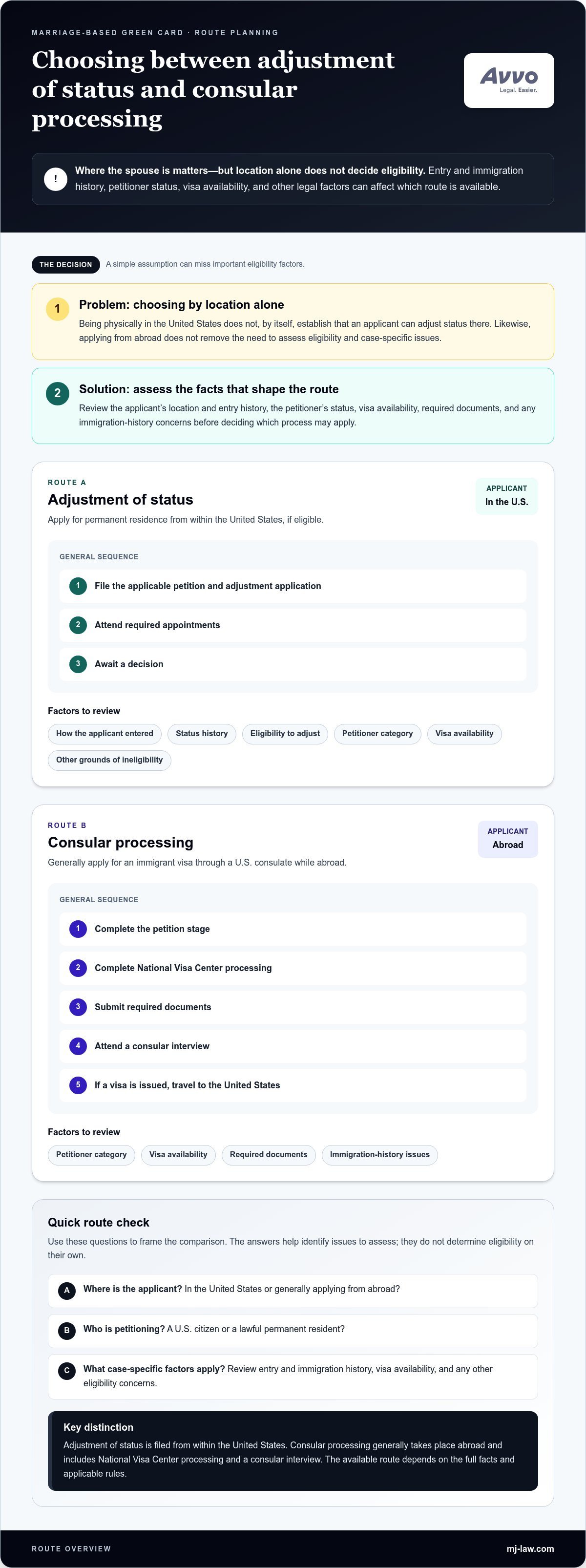
Once you’ve identified the petitioner’s status and the applicant’s circumstances, consider where the spouse will apply. The two main routes are adjustment of status, filed from within the United States, and consular processing, which generally involves applying for an immigrant visa through a U.S. consulate abroad.
The spouse’s location matters, but it doesn’t determine eligibility for adjustment of status or consular processing on its own. The applicant’s entry and immigration history, the petitioner’s status, visa availability, and other legal factors can affect which route is available. Use the comparison below as a starting point, then assess eligibility based on the specific facts.
| Factor | Adjustment of status | Consular processing |
|---|---|---|
| Location | Applicant is in the United States and may be eligible to apply there. | Applicant generally completes the immigrant visa process while abroad. |
| General sequence | File the applicable petition and adjustment application, attend required appointments, and await a decision. | After the petition stage, complete National Visa Center processing, submit required documents, attend a consular interview, and, if issued a visa, travel to the United States. |
| Key decision points | Entry history, eligibility to adjust, petitioner category, and visa availability. | Petitioner category, visa availability, required documents, and any immigration-history issues. |
When adjustment of status may be considered
Adjustment of status lets an eligible applicant seek permanent residence without leaving the United States to obtain an immigrant visa. Being physically present in the country isn’t enough by itself. A lawyer may need to assess how the applicant entered, their status history, whether a visa is available, and whether another rule or ground of ineligibility affects the application. The analysis can differ for spouses of U.S. citizens and permanent residents.
When consular processing may be considered
For a spouse abroad, consular processing generally follows an approved family petition and transfer of the case for document processing. The applicant submits the required immigrant visa materials, completes a medical examination as instructed, and attends an interview at the designated U.S. consular post. If the visa is issued, the spouse uses it to travel to the United States. Follow current agency instructions, since requirements and procedures can change.
Route selection isn’t simply a preference between staying in the United States and applying abroad. Two applicants who are both inside the country, for example, may have different options because their entry histories or other circumstances differ. Map the green card through marriage process to your specific situation before filing. A case review can also clarify whether visa availability affects timing or the order of filing.
If you’re unsure how these factors apply to your case, discuss your circumstances in an immigration consultation. Experienced counsel can evaluate the available route and help organize the next steps around the applicant’s history and current requirements.
Marriage evidence and eligibility issues: what can complicate a case?
For a marriage-based green card, aim to show a coherent picture of a genuine shared life. A well-organized selection of relevant records may be more useful than a thick stack of unrelated paperwork. A marriage certificate establishes that a marriage took place, but it doesn’t answer every question about the relationship or the applicant’s eligibility.
Evidence may include records of shared residence, joint financial responsibilities, insurance coverage, correspondence, and the relationship’s history. Couples don’t need identical documents. Renters may have a lease, while homeowners may have mortgage or property records. Choose evidence that reflects your actual life together.
How to organize evidence of a bona fide marriage
Group documents by topic instead of sending a disorganized pile. This makes it easier to see how the records support the same timeline and show your shared life.
- Shared household: Lease or mortgage records, utility bills, or official mail showing a shared address.
- Finances and responsibilities: Joint account statements, tax records, insurance documents, or evidence of shared expenses.
- Relationship history: Selected correspondence, photographs, travel records, and a brief timeline of how the relationship developed.
These are examples, not a mandatory checklist. Use records that genuinely apply to your circumstances, and explain unusual gaps or differences when needed. Before filing, compare forms with supporting documents for consistent names, dates, addresses, and relationship details. If a document shows an earlier address, for example, make sure its date and context are clear rather than leaving the difference unexplained.
Immigration history and other case-specific concerns
Relationship evidence is only one part of the review. The applicant’s history can affect which route is available and how eligibility should be assessed. Disclose relevant facts accurately, including prior entries, periods of overstay, possible misrepresentation concerns, criminal history, and previous immigration filings. An issue in one of these areas doesn’t automatically determine the outcome; its significance depends on the specific facts and applicable law.
Don’t guess at answers or leave out a past event because it seems minor. An old visa application or a prior encounter with immigration officials, for example, may matter when compared with information in a new filing. USCIS may also request evidence if the record doesn’t adequately address a question. A clear, timely response should answer the request directly and include relevant supporting documents.
Because immigration history can affect both eligibility and preparation, a case-specific review may help identify concerns before filing. Couples seeking guidance on the green card through marriage process can discuss their circumstances in an immigration law consultation, including how to organize evidence and address potential complications.
From filing to decision: forms, biometrics, and the interview
After choosing a route, the couple prepares forms and supporting records, files the applicable package, and follows instructions from the agencies handling the case. The green card through marriage process may then involve receipt notices, biometrics, requests for additional evidence, and an interview before a decision. The sequence varies by case, and processing times can vary too.
USCIS notices set out case-specific appointments and response deadlines. Read each notice carefully, keep a copy, and calendar any required action. If a notice is unclear or a deadline may be difficult to meet, seek guidance promptly rather than guessing what to do.
Preparing and submitting the application
The forms depend on the route and the petitioner’s status. A family petition, usually Form I-130, establishes the qualifying relationship. An eligible applicant applying from inside the United States generally uses Form I-485 to seek adjustment of status. Financial sponsorship forms and supporting documents may also be required. Applicants abroad follow a different immigrant visa process.
Before filing, verify current form editions, filing instructions, and submission requirements on the relevant government websites. Updated mandatory editions of Forms I-485 and I-864 apply in 2026. Applicants adjusting status should also confirm current medical-examination filing instructions, including whether Form I-693 must accompany the application. Answer every question consistently, check that supporting records match the forms, and keep a full copy of everything submitted.
What may happen after filing?
Next steps depend on the route and the case. USCIS may issue receipt notices, schedule biometrics to collect fingerprints and photographs, request more evidence, or send an interview notice. Consular cases may involve document processing and an interview abroad. These are possible milestones, not a guaranteed timeline or checklist for every applicant.
- Prepare and review: Match the forms and evidence to the route, and check names, dates, and addresses for consistency.
- File as instructed: Submit the applicable forms and supporting documents according to current agency directions.
- Track notices: Save agency correspondence and respond to requests by the stated deadline.
- Attend appointments: Follow instructions for biometrics, medical requirements, and any scheduled interview.
- Await the decision: Review the result and any next steps stated in the official notice.
An interview gives an officer an opportunity to review the relationship and clarify information in the application. As of 2026, in-person interviews are expected for nearly all marriage-based green card applicants, but follow the instructions in your case notice. Prepare to answer truthfully and consistently, and bring the documents requested for the appointment. A marriage green card interview guide can help couples prepare without memorizing scripted answers.
For help reviewing forms, filing order, or notices, schedule an immigration consultation to discuss your marriage-based green card case.
Plan your marriage green card case with experienced immigration counsel
A clear filing strategy starts with the facts that shape the case: whether the petitioner is a U.S. citizen or permanent resident, where the spouse is, the applicant’s immigration history, and the evidence available to document the marriage. These details can affect route selection, eligibility, filing order, and how to prepare supporting records. A careful review turns a complex process into a set of decisions based on the couple’s circumstances.
Experienced immigration counsel can assess these factors, identify questions to address before filing, and develop a strategy around the couple’s situation. This doesn’t guarantee eligibility or approval. It helps couples make decisions with a fuller understanding of the relevant facts and current requirements.
What to prepare before discussing your case
A little preparation can make a consultation more focused. You don’t need to resolve every legal question in advance, but a concise summary can help counsel understand the timeline and identify important follow-up questions.
- Relationship timeline: Note when and how you met, important milestones, your marriage date, and any periods living apart.
- Immigration history: Summarize each spouse’s entries, prior applications, status changes, or other relevant events as accurately as possible.
- Existing records: Gather prior immigration notices, travel records, and copies of applications or petitions previously submitted.
- Current evidence: Bring examples of records showing shared residence, finances, insurance, or other aspects of your life together.
Keep the summary factual, and flag anything you’re unsure about rather than filling gaps with guesses. This preparation supports a focused discussion, but it doesn’t replace legal advice or a full review of the documents.
Local immigration guidance in San Jose and San Francisco
MJ Law is an immigration law firm based in San Jose and serving the Silicon Valley community. The firm’s family immigration practice includes marriage-based green card representation, backed by more than three decades of immigration experience. Couples in San Jose and San Francisco can consult in English or Spanish, whichever language is more comfortable for discussing personal history and case details.
Local counsel can help organize a filing strategy, while USCIS and consular officials make decisions under federal immigration procedures. Legal guidance can help analyze the couple’s facts, explain relevant options, and prepare an application for the requirements of the selected route. This can be especially useful when immigration records are incomplete, prior filings contain inconsistencies, or the couple is unsure how to document parts of their shared life.
If you’re considering the green card through marriage process, MJ Law can discuss your circumstances and help you understand potential next steps. Schedule a marriage green card consultation to begin a focused conversation about your case.
Take the Next Step With a Clear Plan
Before filing, take time to make decisions based on the full picture, not just the first form or checklist you find. A focused review of your circumstances can clarify which questions need answers and what information to gather next. That preparation can make the green card through marriage process feel more manageable, even when the path isn’t straightforward.
MJ Law provides family immigration and marriage-based green card guidance, with consultations available in English and Spanish. With careful preparation and informed guidance, you can move forward one decision at a time. Schedule a marriage green card consultation to discuss your circumstances and possible next steps.
Frequently Asked Questions
Can I apply for a marriage green card if I entered the United States without inspection?
Possibly, but entry without inspection can raise a serious eligibility issue, and marriage alone doesn’t resolve it. The effect depends on your full immigration history and whether an exception or waiver may apply. Gather records related to your entry and past immigration matters before deciding how to proceed. Couples in San Jose and San Francisco can discuss these facts with immigration counsel before filing.
Can I work while my marriage green card application is pending?
Not automatically. Filing a marriage-based case doesn’t, by itself, authorize you to work. Depending on your route and eligibility, you may be able to apply separately for an employment authorization document. Wait until that authorization is approved before beginning employment, and review its validity dates and conditions. If you already have separate work authorization, check whether it remains valid rather than assuming the pending green card case extends it.
Can I travel outside the United States while my application is pending?
Get advice before making travel plans. Leaving the United States may affect a pending application, and the consequences depend on your status, filing route, and eligibility for a travel document. Some applicants need advance permission before departing; a pending application alone doesn’t establish that it’s safe to travel. Review your specific situation with an immigration attorney before booking a trip, even if the absence is expected to be brief.
How long does the green card through marriage process take?
There’s no single timeline. The green card through marriage process can vary with the application route, petitioner category, visa availability, agency workload, and case-specific requests or complications. Government processing-time estimates are updated periodically and don’t guarantee when an individual case will be decided. Check the latest USCIS estimate for the relevant form and service center, or current consular guidance, and plan for the possibility that your case may take longer.
Does the U.S. citizen or permanent resident spouse need to meet an income requirement?
Generally, the sponsoring spouse must meet financial sponsorship requirements, which depend on household size and the evidence available. Under the guidelines effective March 1, 2026, the usual minimum is 125% of the Federal Poverty Guidelines. For a household of two, that is $27,050 annually; active-duty military sponsors petitioning for a spouse generally use the 100% guideline. Current Form I-864 instructions explain documentation and possible joint-sponsor considerations.
What happens if the marriage ends before the green card case is decided?
The case may be affected because the marriage is the basis of the family petition. What happens next depends on the application stage and the specific circumstances, so don’t assume the case can continue unchanged or that withdrawing it is the only option. Before sending an update, withdrawing a filing, or responding to an agency notice, get advice based on the records already submitted and the current status of the case.
Will a marriage-based green card case always require an interview?
As of 2026, in-person interviews have been reinstated for nearly all marriage-based green card applicants, though applicants should follow the instructions issued for their individual case. USCIS or the consular post will provide appointment details if an interview is scheduled. Review the application beforehand, bring requested documents, and answer questions truthfully. Don’t assume an interview will be waived or handled the same way as another couple’s case.